




Stranger Than Heaven
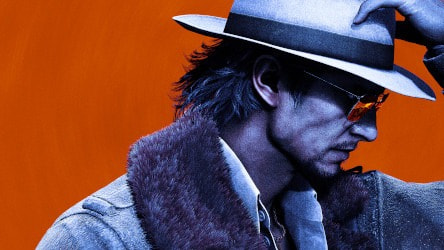
Stranger Than Heaven is a single-player action-adventure that follows one man across five Japanese cities, each set in a different year between 1915 and 1965.
RGG Studio develops the game and SEGA publishes it. Play alternates between street-level brawling and a second career in entertainment that has the protagonist writing songs and staging shows.
Top 3 Reasons to Play
A saga that was nearly three games
Executive director Masayoshi Yokoyama has said the concept was first planned as a trilogy, then folded into one release so players would not have to wait between installments. The main story took six to seven years to develop, and he describes its length as something that grew on its own once the team wrote down everything it wanted to cover.
Combat that rewards patience
Producer Hiroyuki Sakamoto calls the new fighting system one of the game’s biggest features. Anime News Network’s hands-on preview found that mashing one or two buttons, a shortcut that works in the series’ brawler-style entries, gets nowhere here, and that the system asks for a more deliberate approach.
Songs made from street noise
Makoto can stop beside ordinary sounds, such as a broom on the pavement or animal cries in the distance, and save them as recordings. Those recordings become raw material for original compositions with different instruments and moods.
Story and Lore
Makoto Daito’s story opens in San Francisco in 1915. The son of an American father and a Japanese mother, he has lost both parents and faces persecution because of his Asian heritage. He sneaks aboard a ship bound for Japan. His mother came from there, and he hopes it will take him where the United States couldn’t.
A merchant called Orpheus owns the vessel, and a second stowaway, Yu Shinjo, is hiding aboard as well. Orpheus nearly throws the two overboard before deciding to keep them. Once the ship docks in Kokura, he puts Daito to work as a helper, partly because Daito speaks Japanese.
Daito and Shinjo want different things. Daito mostly wants to survive and find his footing; Shinjo has larger plans for remaking the country. Their ideas clash and they part in Fukuoka, then end up working together again as partners in show business.
Five cities, five years
- 1915, Kokura (Fukuoka): an industrial city that draws laborers from across the country. With little modern entertainment on offer, vice such as gambling and prostitution fills the gap.
- 1929, Kure (Hiroshima): a shipbuilding port that hosts visitors from many countries, where Daito starts making a name for himself.
- 1943, Minami (Osaka): the entertainment district of western Japan under wartime strain. Daito and Shinjo are reunited and launch their show-business venture.
- 1951, Atami (Shizuoka): a coastal resort town of cherry blossoms and wide views, with American trends beginning to reshape music and fashion.
- 1965, Shinjuku (Tokyo): the last stop, centered on the district the series calls Kamurocho. Yokoyama says a major secret comes out in this chapter.
RGG Studio treats these cities as invented play spaces rather than reconstructions. Real historical events, Yokoyama explains, are left out unless they touch Daito’s own story, and Steam’s description calls the setting an alternate version of Japan.
A question of belonging runs under the crime plot. Daito is accepted fully by neither the United States nor Japan, and Shinjo lands in Japan under similar pressure.
Gameplay and Mechanics
Combat
Makoto’s left and right sides are controlled separately. On a controller, the bumper and trigger on the left handle the left arm and leg, and the pair on the right handle the right side. That allows a one-handed block followed by a counter from the other hand, or an attack with a free arm while the enemy holds the other. Holding a button charges a strike for extra force, and pressing both triggers together tackles an opponent.
- Weapons range from knives, hammers and mallets to katanas and newer inventions of the era. They can be upgraded and carry special attacks and passive abilities.
- Finishing moves and context-based attacks change with the situation Makoto is in.
- Some fights are staged as cinematic set pieces, including a close-quarters brawl inside a moving car.
Show business
Between fights, Makoto works as a showman. Rumors gathered on the street and conversations overheard in town point him to singers and performers worth recruiting. A show is assembled by choosing the band and the setlist, assigning the cast, then designing the production down to stage lighting and colors, and advertisements bring in the audience. The songs written along the way supply the material.
Side activities and scale
Era-specific minigames fill the gaps between story beats: arm wrestling, dice betting and card games in Fukuoka, target shooting in Osaka. Yokoyama notes that there are fewer of them than in the Like a Dragon games, and that side stories take a noticeably different tone because of the historical setting.
He describes each city as roughly the size of the maps in the Like a Dragon games, with more enterable interiors and fewer tall buildings.
Characters and Factions
Yu Shirota plays Makoto Daito and Dean Fujioka plays Yu Shinjo. Daito is half American and half Japanese, while Shinjo is half Japanese and half British. Yokoyama picked Shirota, who is also of mixed heritage, for the estranged, ambiguous quality he wanted in Daito. Snoop Dogg plays Orpheus, a globe-trotting merchant with a flexible view of what is legal to sell and the first person to recognize Daito’s musical gift.
Kokura
- Heigo Yashima, played by Akio Otsuka, is a merchant and local boss who built his fortune in trade. SEGA lists him as the mentor who helps Daito find his way in Japan.
- Tadashi Hataoka (Takashi Ukaji) is a swaggering, violent yakuza.
- Tae Matsumoto is a café waitress and also a yakuza member’s mistress, played by Moeka Hoshi.
Kure, Osaka and Atami
Genzo Iwaki is the boss of Kure, with influence nobody in the city matches. His likeness belongs to the late actor Bunta Sugawara, used with his family’s consent and modeled on archival footage and photographs supplied through Toei, the studio behind Sugawara’s films, including Battles Without Honor and Humanity. Takashi Ukaji voices the character. Tetsuya Hama (Yasukaze Motomiya) is the young yakuza at Iwaki’s right hand.
Keiko Shirai, played by Ado, is known as the diva of wartime Osaka. Her design is original rather than modeled on the singer, who keeps her face private. Suzy Day (Tori Kelly) is an aspiring singer Daito meets in Atami, and her rise through show business begins after that meeting.
Elsewhere in the cast
- Takashi, played by Satoshi Fujihara of Official Hige Dandism, is Daito’s sworn brother: a gifted pianist who lives for the moment.
- Suekichi (Kouhei Tsuji) is another sworn brother, carefree but dependable when it matters.
- Takeo Godai is a craftsman of few words, played by Takaya Kuroda.
- Kiyoshi Otsuru (Tokuma Nishioka) is a stylish older man whose authority is plain to everyone around him.
- Kimura, played by Daisuke Shiba, is an easygoing nightclub worker in Kamurocho.
- The Veiled Stranger, a man stationed in postwar Japan, is played by Cordell Broadus, Snoop Dogg’s son.
- Amaru, a man in hiding in Japan, is the character Tupac Shakur portrays. His part in the plot has not been detailed.
Factions
Daito’s path runs through several organizations. In Kokura the underworld revolves around merchants and yakuza such as Yashima’s circle. The Iwaki Family, described as the strongest organization in Hiroshima, takes Daito in during the Kure chapters, and it is there that he earns the name Red Oni. In wartime Osaka, the yakuza and the Italian Mafia compete for influence out of public view while new forms of entertainment thrive on the surface. Where the road ends is the Tojo Clan, the organization at the center of the Like a Dragon series. The game presents itself as that clan’s origin story and casts Daito as its founder.
Editions
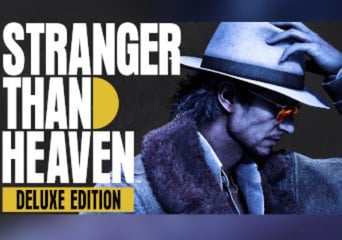
Three editions are listed: Standard, Deluxe and Collector’s.
Standard contains the base game and nothing else.
Deluxe adds the following:
- an original outfit for Makoto Daito
- four additional weapons
- four additional skilled performers for shows
- three stage production items
- a promotional poster
- a record player for the home base that plays music from each era
- an electronic camera that extends the photography feature
SEGA notes that these items are obtained and used by progressing through the main story, and that a patch may be needed before they work.
Collector’s is a physical package: a disc, a designer box, a SteelBook and a 12-inch vinyl record with selected songs from the game, including the main theme. A code for the Deluxe Upgrade DLC and a pre-order bonus code are inside as well.