

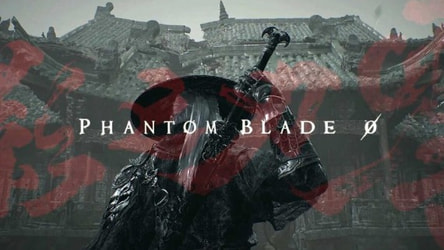




Phantom Blade Zero
Sixty-six days. That's how long a mystic healer's makeshift cure buys Soul, an elite assassin framed for murdering the head of the secretive organization he served. S-GAME's wuxia action RPG turns that countdown into the entire shape of the game: track down whoever set him up, survive the former allies now hunting him, and do it all before the wound catches up.
Built in Unreal Engine 5, the game wraps its Wuxia martial-arts core in a darker, stranger visual identity that S-GAME calls "Kungfupunk." Phantom Blade Zero launches 29 October, 2026 for US and selected regions on Steam, PlayStation 5 and the Epic Games Store. Global launch is set to 29 October.
Top 3 Reasons to Play
A few things set this apart from the usual wave of hack-and-slash releases:
Fight choreography built by people who know real kung fu. S-GAME's team spent years training with martial arts schools and traditional performance troupes before animating a single combo, and Donnie Yen has been Creative Consultant since 2023, shaping the game's overall kung fu style through motion capture and direct feedback on how fights should read on screen. The result draws its rhythm from actual martial arts cinema rather than a generic moveset.
A combat system that punishes hesitation, not caution for its own sake. There's no stamina bar. Every hit, dodge, and parry builds Soul's Sha-Chi resource, which then fuels the power attacks and secondary techniques that actually turn a fight around.
A world sized for exploration. Wulin is split into eight interconnected, handcrafted regions rather than one sprawling open map, navigated with an ink-drawn style world map and Bells that double as fast-travel points along the way.
Story and Lore
Soul spent years as one of the most capable operatives inside The Order, an elusive organization holding together an uneasy balance of power across Wulin. That ended the moment he was framed for murdering the Order's own patriarch. Gravely wounded during the manhunt that followed, he's saved from death by a mystic healer – but the cure only holds for sixty-six days, and every chapter moves that clock forward. Clearing his name means confronting people who once trained him, not a faceless list of enemies.
This isn't S-GAME's first trip into the Phantom World. The same setting anchors Phantom Blade: Executioners, a mobile prequel following a younger version of Soul, and the studio describes this game as a much larger spiritual rebirth of its earlier PC release, Rainblood: Town of Death. None of that prior material is required reading – the developers have said the story stands on its own – but it explains why some faces Soul meets already have history with him.
"Kungfupunk" is S-GAME's own term for the look and feel of Wulin, and it's more literal than it sounds. The team drew on real cultural touchstones to ground the martial arts and ceremony before layering in mechanical prosthetics and strange, steam-driven devices. A few references that show up directly in stances, props, and environmental design:
- Shaolin Temple and Emei Mountain martial forms
- Southern lion dance troupes and ancestral hall worship practices
- Beijing opera and Sichuan face-changing performance
S-GAME has said smaller choices ripple into Soul's wider journey without relying on a traditional good-versus-evil meter, and the story supports multiple endings depending on how those choices and NPC relationships play out.
Gameplay and Mechanics
Combat runs on Sha-Chi, a resource built by landing basic attacks, timing dodges, and pulling off parries, then spent on heavier techniques, blocking, and Phantom Edge abilities. Enemies throw two attack types that force a choice: Brutal Moves can be blocked, but chew through a big chunk of Sha-Chi if you stand and take them, while Killer Moves can't be blocked or parried at all and have to be dodged outright. Reading the difference in real time, and answering it with a well-timed parry to trigger Ghoststep, is where the combat's actual skill ceiling sits.
Soul can carry two primary weapons at once and switch between them mid-combo, backed by more than thirty primary weapons and over twenty Phantom Edge secondary techniques across the full game. Each weapon type – twin blades, longsword, greatsword, spear, dual daggers, and others – comes with its own moveset rather than a shared template with palette-swapped animations, and defeating a boss unlocks their signature weapon for your own use.
Four difficulty settings are built into the base game, no edition required:
- Wayfarer – built for players who want the story with fewer combat demands.
- Pathbreaker – the standard, balanced difficulty.
- Hellwalker – enemies get more adaptive, fighting-game-style AI that reacts to spacing and repeated tactics rather than following fixed patterns.
- Sixty-Six Days – Hellwalker's difficulty with a twist: every death costs Soul one of his sixty-six remaining days, and running out ends the playthrough for good.
Boss fights are built around two phases, and dying in the second one respawns you there instead of forcing a full restart. Once you've cleared a boss, the Li Wulin mode lets you rematch them freely and hunt down hidden bosses that don't appear during the main story.
Characters and Factions
Soul is the character you play throughout: a former enforcer for The Order who spent years carrying out the organization's dirty work before becoming its target. The story treats him less as a blank avatar and more as someone with real history with the people trying to kill him, which shapes how side quests and NPC encounters play out.
The Order is the organization Soul served before he was framed, an institution powerful enough that its patriarch's death threw the wider region into instability. Members of The Order make up a meaningful share of the people now hunting Soul down, turning the revenge plot into a conflict with people who once trained him.
One of the more prominent factions revealed so far is the Bastion of Mó, led by Mó Yuan – a character whose face and movement come from Donnie Yen's motion capture work, tying back to Yen's broader creative role on the project.