



Hytale
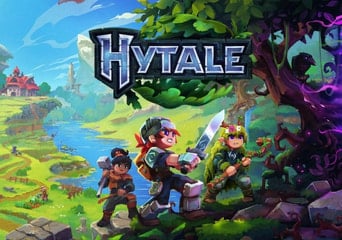
Sandbox building, RPG-style adventuring, and modding tools built directly into the server sit at the center of this Hypixel Studios project. The world, called Orbis, is split into procedurally generated Zones, each with its own biome, creatures, and resident factions, and players can approach it through Exploration mode for open survival-lite sandbox play or Creative mode for unlimited, resource-free building. Hypixel Studios released Hytale into Early Access on January 13, 2026, distributing it exclusively through its own launcher.
Top 3 Reasons to Play
- Mods that install themselves the moment you connect - Modding runs entirely server-side: plugins are written in Java and custom models come from an official Blockbench plugin, rather than files a player has to manage locally. Join a modded server and its custom content streams to your client automatically during the connection handshake, so there's no separate mod manager or matching client version to track down.
- Factions that actually remember what you did - Every Zone comes with its own resident peoples rather than generic hostile mobs. Rescue a Kweebec from a Trork camp in the Emerald Wilds and its kind treat you better; chop down the wrong tree or attack one, and reputation drops instead. The same standing system runs across the Feran, Scarak, Outlander, and other factions further out, so the world reacts to specific choices instead of just tracking a kill count.
- World rules you set before you ever spawn in - Starting a new Exploration-mode world means choosing PvP on or off, whether fall damage applies, how fast day turns to night, and exactly what you lose on death: inventory, durability, resources, any combination, or none of it. It turns the same base game into anything from a punishing survival run to a relaxed building session, without needing a different mode or a mod to get there.
Story and Setting
Orbis generates procedurally, breaking the map into Zones that get harder and more rewarding the farther out a player pushes. The starting region, the Emerald Wilds, is a low-danger mix of forest and greenery built to introduce basic mechanics before anything more dangerous shows up. At least four Zones exist so far, including the arid Howling Sands and the snow-covered Whisperfrost Frontiers, with Hypixel Studios adding more through regular content updates rather than a single finished map.
Combat in these Zones leans RPG rather than pure sandbox survival: distinct weapon families, blocking, and charged attacks carry players into dungeons that hide loot and boss rooms, and clearing a boss typically opens a gateway into new territory or guards a resource needed to progress further. A more story-driven Adventure mode, aimed at structured goals rather than open-ended exploration, is planned but not yet playable; the studio's first major content chapter was previewed in July 2026.
Characters and Factions
- Kweebec – sentient, generally peaceful plant-people native to the Emerald Wilds, with a lifecycle that runs from mobile seedlings to fully rooted trees. Reputation rises by freeing them from Trork camps and falls if they're attacked or nearby trees are cut down.
- Trork – the Emerald Wilds' early antagonists, ranging from basic camp grunts to chieftains; territorial enough to turn hostile the moment their camps are disturbed.
- Scarak and Feran – both native to the desert Howling Sands. The fox-like Ferans carry a history of enslavement under the Scarak, and offering gifts or making offerings to their deity raises standing with them.
- Outlander and Faun – found further out in the colder Whisperfrost Frontiers, one of the later Zones added to Orbis.
Standing with any of these groups is tracked individually rather than as one global reputation score, so a player can be welcomed by one faction while still hunted by a rival on the very same map.
Gameplay and Mechanics
Weapon crafting is gated by the Blacksmith's Anvil rather than a flat tech tree: a base Anvil makes Crude, Copper, and Iron gear, an upgraded Tier 2 unlocks Thorium and Cobalt, and Tier 3 opens up Adamantite and Mithril. Armor follows the same pattern through a separate Armorer's Workbench.
- Durability and repair – tools, weapons, and armor wear down with use. A Repair Kit crafted at a Workbench restores durability but permanently trims up to 10% off that item's maximum, so gear can be patched up a few times before replacing it becomes the better option.
- Three linked modes – Exploration for survival-lite sandbox play, Creative for unrestricted building, and the still-unreleased Adventure mode for a more curated RPG experience with fixed objectives.
- Dedicated servers – self-hosted and rented servers are supported from Early Access launch, with an in-client Server Discovery browser (added in Update 5) for finding community servers by region and tags.
- Controller support – added in Update 5 for Xbox, PlayStation, and Switch Pro controllers, with gyroscope aiming layered in during Update 6; the interface itself is still being reworked for full gamepad use.
Platform-wise, Early Access launched on Windows, with macOS and Linux builds following as development continued; there's no official Steam Deck certification yet, though the Linux build runs on it through Proton.
Editions
All three Early Access editions grant identical gameplay access; the only differences are cosmetic, and a player can move up a tier later by paying just the price difference.
- Standard Edition: full Early Access access plus a Standard cape and three cosmetic sets: Forest Guardian, Voyager, and Savanna Scout.
- Supporter Edition: everything in Standard, plus the Featherbound, Scavenger, and Arctic Scout sets, extra capes, and the Explorer Goggles.
- Cursebreaker Edition: everything in Supporter, plus several further cosmetic sets such as Hope of Gaia and Void Hero, exclusive capes, and a name listed in the game's Early Access Founders credits.
These editions are tied to the Early Access period specifically and are expected to be replaced once the game reaches a full 1.0 release.