






Planet Zoo 2: Zoo Building and Conservation Sim
Piece by piece, you assemble the enclosures, aquariums and aviaries of a working zoo, then keep it solvent while animals, guests and staff each ask for something different. Planet Zoo 2 is Frontier Developments’ single-player sequel to Planet Zoo, a construction and management sim in which every species brings its own set of needs.
Top 3 Reasons to Play
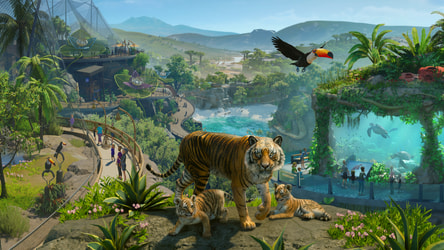
Water and sky join the roster. Fully aquatic animals debut in Planet Zoo here, housed in freshwater or saltwater aquariums you build yourself. Blacktip Reef Sharks, Hawksbill Turtles and Ocean Sunfish sit in the announced line-up next to a West Indian Manatee. Flying species get their own setup: aviaries made from barriers, support poles and dynamic mesh covers, where Toco Toucans and Secretarybirds actually take off.
Behaviour follows mood. An emotion system ties each animal’s state to habitat quality and welfare. Residents short of enrichment, food or fresh drinking water turn lethargic, while well-kept ones show a broader range of natural behaviour. Herd animals graze on the vegetation you plant for them.
Releases stay in the picture. Frontier calls release in the first game abstracted: an animal left, and Conservation Credits arrived. Now released groups move into Wildlife Reserves you help establish, and the research done there flows back to your zoos.
Story and Lore
There is no sprawling mythology here. The setting is FEN, the Fauna and Ecosystems Network, an in-game non-profit built around conservation, animal welfare and rewilding. Career mode casts you as its new Conservation Coordinator, sent around the world to improve zoos, visit Wildlife Reserves and work through a run of varied scenarios. Frontier pitches it as a fun-filled adventure with an exceptional cast of characters met along the way.
Real-world grounding comes from Chester Zoo, whose keepers and conservation scientists appear in Frontier’s Keeper Talks videos on species such as the Western Chimpanzee and the Sumatran Tiger.
Gameplay and Mechanics
Three modes share one toolset. Career teaches the systems through FEN scenarios. Sandbox lets the player decide how much simulation and challenge applies before building a zoo or reserve outright. Franchise links sites into an international network, with animal trading between players and community conservation efforts layered on top. The Planet Hub, open in every mode and reachable mid-game, works as a global menu for hopping between locations and handling trading, storage and research without a trip back to the main menu.
Building. Construction runs on two tracks: place a ready-made blueprint, or assemble everything piece by piece with scaling, flexi-colour and pathing systems and new terrain and foliage brushes for sweeping changes. Nine scenery themes are available, four of them new and drawn from architecture around the world, five returning from the original game. Seasons alter how a zoo looks as the months pass, a first-person guest view lets you stroll through your own work, and blueprints or whole parks travel between platforms through the Frontier Workshop.
Running the place.
- Welfare starts with food and water access, enough space, suitable terrain and plants, and a fulfilling social and enrichment environment. Above that baseline sits a Thriving state, unlocked by researching a species’ needs in the wild, which extends lifespans and prompts larger guest donations.
- Guests need toilets, food, drink and somewhere to rest; unmet, they leave early or ask for refunds. They also want to learn, through educator talks, information boards, speakers, webcams and tours. Habitats need sightlines for visitors and hiding spots for the animals, and poor welfare draws protesters to the fence.
- Staff come in six roles: caretakers, keepers, mechanics, vendors, vets and educators, assignable to work zones.
- Cash covers expansion, adoptions, hiring and running costs such as salaries and energy. Tickets, souvenirs and donations bring it in; marketing campaigns for individual animals cost money but pull in guests, and a loan delivers funds at once with interest attached.
Overall performance lands in a Zoo Reputation score out of five stars, simplified compared with the first game and scored across animal husbandry, sustainability, guest education and guest experience. Sustainability, for instance, counts recycling bins and renewable power.
Wildlife Reserves. These are separate sites, run with a minimal staff presence. Animals leave in release groups, meaning distinct groupings of a single species, and each group has requirements to meet before release. A Research Network built around a Research Outpost and its vehicle, plus observation platforms, acoustic monitors and camera traps, lifts the reserve’s Biodiversity Rating. The returns come home to the zoos as Conservation Credits, deeper species research and fresh options for helping animals thrive. Not every species qualifies: Frontier restricts releases to animals with an appropriate reserve.
Characters and Factions
FEN is the one organisation that matters in Career mode, and its people are few. Eric Ashford, the network’s chairman, and Zoo Operations Manager Alys Jones front Frontier’s overview video; marine biologist Kai Brooks rounds out the named staff.
The animals carry most of the personality. Frontier’s first Feature Focus video followed lioness Zuri and bachelor Tao, a pair of West African Lions, to demonstrate behaviour and welfare needs. Announced species range from lions, chimpanzees and giant pandas to Hawksbill Turtles and Javan green magpies, and the Zoopedia on Frontier’s site holds the full list.
Editions
Two editions exist. Standard is the complete base game. Deluxe adds the Deluxe Upgrade Pack: six extra species and a selection of exclusive animal signs.
- Golden Eagle (flying species)
- Golden Lion Tamarin (primate)
- Great Hammerhead Shark (aquarium)
- Axolotl (amphibian)
- Blue and Gold Fusilier (reef fish)
- Longfin Batfish (reef fish)
Frontier lists nothing else in the upgrade, and no DLC has been announced.