







Overview and Introduction
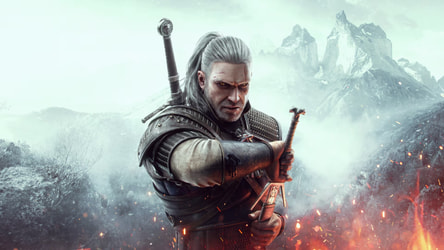
The Witcher 3: Wild Hunt is an open-world action role-playing game developed and published by CD Projekt Red. Based on the dark fantasy book series by Andrzej Sapkowski, the game concludes the story of Geralt of Rivia, a mutated monster slayer for hire known as a witcher.
Set in a continent torn apart by war, political intrigue, and supernatural threats, the game places players in a massive, reactive open world. Progression relies on narrative exploration, investigative witcher contracts, dynamic swordplay, alchemy, and character skill customization.
- Core Pillars of The Witcher 3: Wild Hunt:
- Vast Open-World Exploration: Navigate diverse regions including the war-ravaged swamps of Velen, the bustling free city of Novigrad, the windswept Skellige Islands, and the ancient fortress of Kaer Morhen.
- Consequential Storytelling: Experience a mature narrative where player choices dynamically influence quest outcomes, faction balances, character fates, and the ultimate ending of the story.
- Tactical Witcher Combat: Combine swordplay with two types of swords (steel for humans, silver for monsters) with five magical Signs, alchemical brews, bombs, and crossbow marksmanship.
Top 3 Reasons to Play The Witcher 3: Wild Hunt
The Witcher 3: Wild Hunt stands as a landmark title in the action-RPG genre, blending deep narrative design with expansive world-building.
- Branching Moral Choices and Narrative Depth: Quests avoid simple good-and-evil tropes, presenting grey moral dilemmas with long-term consequences that ripple throughout the game world.
- Methodical Monster Hunting and Alchemy: Preparing for monster contracts requires researching target weaknesses in the Bestiary, crafting targeted oils, potions, and bombs, and using Witcher Senses to track beasts to their lairs.
- Rich In-Game Ecosystem & Gwent: Features dozens of side quests, hidden treasure hunts, horse racing, fist-fighting tournaments, and the collectible card game Gwent.
Story, Lore, and World
The narrative of The Witcher 3: Wild Hunt centers on Geralt's quest to find his adopted daughter, Ciri (Cirilla Fiona Elen Riannon), a child of elder blood pursued by the Wild Hunt, a spectral cavalcade of elf warriors from another dimension led by King Eredin.
Major Regions of The Continent
- White Orchard: A small, war-torn Nilfgaardian-occupied village serving as the introductory prologue region.
- Velen (No Man's Land): A desolate, impoverished province plagued by disease, deserters, and ancient dark magic overseen by the Crones of Crookback Bog.
- Novigrad: A heavily fortified, populous maritime city-state defined by religious fanaticism, crime syndicates, and political tension.
- Skellige Islands: A rugged archipelago inspired by Norse culture, inhabited by fiercely independent clan warriors, sea raiders, and ancient beasts.
- Kaer Morhen: The secluded, decaying mountain fortress of the School of the Wolf where witchers were traditionally trained.
- Toussaint (Blood and Wine Expansion): A sun-drenched, wine-producing duchy untouched by war, concealing ancient vampire secrets behind a chivalric facade.
Gameplay, Combat, and Mechanics
Gameplay in The Witcher 3 merges real-time action combat with deep preparation systems and open-world investigation.
Core Combat and Preparation Mechanics
- Dual Swords: Geralt equips a Steel Sword for human bandits and wild animals, and a Silver Sword for magical beasts, specters, and cursed entities.
- Witcher Signs: Active magical spells utilized during combat encounters:
- Aard: A telekinetic shockwave that knocks back enemies and breaks physical barriers.
- Igni: A pyrokinetic blast that ignites foes.
- Yrden: A magical trap that slows targets and forces spectral enemies into physical form.
- Quen: A defensive force field that absorbs incoming damage.
- Axii: A mental charm that stuns opponents in combat or influences NPC dialogue choices.
- Alchemy System: Craft potions (such as Swallow or Tawny Owl), decoctions from monster mutagens, blade oils, and tactical bombs to gain advantages against specific bestiary targets.
- Witcher Senses: An investigative tracking overlay that highlights footprints, scent trails, clues, and hidden loot objects in the environment.
Main Characters and Factions
The narrative features a deep cast of characters originating from Sapkowski's lore and CD Projekt Red's prior titles.
Central Protagonists and Allies
- Geralt of Rivia: A veteran witcher of the School of the Wolf, mutated to possess superhuman reflexes, heightened senses, and resistance to toxins.
- Ciri: Geralt’s ward and apprentice, possessing the Elder Blood, granting her the ability to manipulate space and time.
- Yennefer of Vengerberg: A powerful sorceress, member of the Lodge of Sorceresses, and Geralt’s romantic interest.
- Triss Merigold: A skilled sorceress, advisor, and close ally to Geralt and the witchers of Kaer Morhen.
- Vesemir: The oldest surviving witcher and mentor to Geralt at Kaer Morhen.
- Dandelion (Jaskier): A famous bard, poet, and Geralt's loyal companion who chronicles his adventures.
Major Factions and Antagonists
- The Wild Hunt: Spectral elven warriors from the realm of Aen Elle, led by King Eredin Brócc Glas, seeking Ciri's power for her Elder Blood.
- Nilfgaardian Empire: A massive southern imperial power led by Emperor Emhyr var Emreis (Ciri’s biological father), invading the Northern Realms.
- Redania: A powerful northern kingdom led by the ruthless King Radovid V, fighting against the Nilfgaardian invasion while prosecuting mages and non-humans.
Game Engine, Graphics, and Performance
The Witcher 3: Wild Hunt was built on CD Projekt Red's proprietary REDengine 3. In December 2022, a major Next-Gen Update was released for PC, PlayStation 5, and Xbox Series X/S, updating the game engine with modern visual technology.
Technical & Visual Features (Next-Gen Update)
- Ray Tracing: Real-time Ray-Traced Global Illumination (RTGI), Ambient Occlusion, Reflections, and Shadows.
- Performance Modes: Options for 60 FPS performance modes on current-generation consoles and unlocked frame rates on PC.
- Upscaling Technologies: Full support for NVIDIA DLSS, AMD FSR, and Intel XeSS upscaling.
- Integrated Community Mods: Official integration of high-resolution texture packs (such as the HD Reworked Project) and quality-of-life gameplay tweaks.
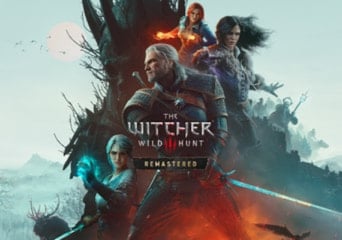
The Witcher 3: Wild Hunt – Remastered
The Witcher 3: Wild Hunt – Remastered is an enhanced version revealed in 2026. It features upgrades to visuals, performance, gameplay, and other aspects of the experience. It includes improved environments, textures, lighting, rendering, and ray tracing, alongside gameplay enhancements such as revamped combat, an updated skill tree, improved character movement, and other quality-of-life changes. The Remastered version also includes Hearts of Stone and Blood and Wine at no additional cost. It launches on September 29, 2026, and is available as a free upgrade to existing owners on qualifying platforms.
Editions, Expansions, and Platform Availability
The Witcher 3: Wild Hunt is available across multiple digital storefronts and console generations.
Available Game Editions
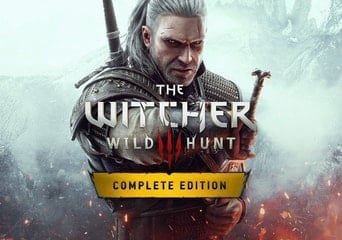
- The Witcher 3: Wild Hunt – Complete Edition (formerly Game of the Year Edition): The definitive bundle containing:
- Full base game
- Hearts of Stone expansion pack (adds a 10–15 hour storyline involving Gaunter O'Dimm and Olgierd von Everec in Oxenfurt and Velen)
- Blood and Wine expansion pack (adds a 25–30 hour storyline set in the new region of Toussaint)
- All 16 free DLC packs
- Integrated Next-Gen graphical and performance upgrades
Platform Availability
- PC (Steam, GOG, Epic Games Store)
- PlayStation 5 & PlayStation 4
- Xbox Series X/S & Xbox One
- Nintendo Switch