

From the whimsical world of pocket monsters to heart-thumping battles and a legacy spanning over two decades, the Pokemon franchise stands as a testament to the power of imagination and enduring nostalgia. In this article, we’ll discuss our favorite Pokemon games!
- The Origins of a Phenomenon
- Pokemon Red and Blue
- Pokemon Crystal
- Pokemon Emerald
- Pokemon FireRed and LeafGreen
- Pokemon Gold and Silver
- Pokemon Diamond, Pearl, and Platinum
- Pokemon Black and White, Black 2 and White 2
- Pokemon X and Y
- Pokemon Sun and Moon, Ultra Sun and Ultra Moon
- Pokémon Sword and Shield
- Pokémon Legends: Arceus
- Pokémon Go
- Conclusion
The origins of a phenomenon
Before dissecting the Pokemon games that have made their mark, it’s crucial to understand the roots from which the series has sprouted. The first Pokemon games, ‘Pokemon Red’ and ‘Pokemon Green’ (later released as ‘Blue’ in the Western market), were a pioneers of the monster-collecting genre, released in Japan in 1996 and internationally in 1998. These games introduced players to the charming regions of Kanto, where they embarked on a quest to become a Pokemon Master. The series followed a classic Japanese role-playing game format with turn-based battles and a dual-phase system that encouraged strategic thinking.
Pokemon Red and Blue
The original RGB trio holds a special place in the hearts of many, setting the benchmark for what a Pokemon game should be. Released in the late ’90s, the games embarked players on a grand adventure to become the champion of the Indigo League, capturing and training creatures along the way. Its simple yet profound mechanics and memorable cast of Pokemon cemented their legacy as the games that launched a cultural phenomenon.
Release date: February 27, 1996
Pokemon Crystal
Premiering in 2000 in Japan and 2001 in North America, ‘Pokemon Crystal’ was the enhanced version of ‘Pokemon Gold’ and ‘Silver.’ The first to allow players to choose between a male and female character, Crystal introduced animated sprites during battles, adding a layer of depth to the experience. The inclusion of the enigmatic Suicune and the Battle Tower expanded on the lore and replayability, making it a fan favorite for many enthusiasts.
Release date: December 14, 2000
Pokemon Emerald
Continuing the tradition of enhanced versions, ‘Pokemon Emerald’ emerged in 2004 in Japan and 2005 in the rest of the world, refining the Hoenn experience. In this iteration, players faced off against both Team Aqua and Team Magma, adding a layer of complexity to the original story. The inclusion of the Battle Frontier extended post-game content, offering numerous challenges and delights for the completionist trainer.
Release date: September 16, 2004
FireRed and LeafGreen
The nostalgia-soaked release of ‘Pokemon FireRed’ and ‘LeafGreen’ in 2004 for the Game Boy Advance allowed fans both old and new to revisit the Kanto region in full color. These remakes retained the charm and simplicity of the originals while incorporating modern quality-of-life improvements. The introduction of the Sevii Islands provided additional adventures for players, delivering a well-rounded package that honored the games that started it all.
Release date: January 29, 2004
Gold and Silver
The second generation, ‘Pokemon Gold’ and ‘Silver,’ brought players to the Johto region in 1999 in Japan and 2000 internationally. For the first time, players could venture to another region—a feature that set these games apart from their predecessors. The introduction of the day and night cycle and breeding mechanics enhanced the player’s connection to their creatures, leading to an experience that felt more dynamic and personal.
Release date: November 21, 1999
Pokemon Diamond, Pearl, and Platinum
In 2006, Japan and 2007, worldwide, ‘Pokemon Diamond’ and ‘Pearl’ introduced the Sinnoh region and a slew of new gameplay elements that left an indelible mark. The introduction of 107 new Pokemon species expanded the roster, and the addition of online capabilities brought players together from around the world. With the release of ‘Pokemon Platinum,’ the series reached new heights with the Distortion World and the Battle Frontier, demonstrating the team’s willingness to innovate and captivate.
Release date: September 28, 2006
Pokemon Black and White, Black 2 and White 2
‘Black’ and ‘White’ shocked the gaming industry in 2010 and 2011, presenting the Unova region with stunning 3D environments on the Nintendo DS. The fifth generation of Pokemon games focused on the themes of truth and ideals, weaving a narrative that encouraged players to question the lore they had grown accustomed to. Black 2 and White 2 continued this story with a timeline jump and an expanded Unova, demonstrating a rare instance of direct sequels in the series.
Release date: June 23, 2012
Pokemon X and Y
Premiering on the Nintendo 3DS in 2013, ‘Pokemon X’ and ‘Y’ represented a significant leap forward with fully 3D models for both characters and creatures. The Kalos region inspired by France brought Mega Evolution—a temporary transformation that gave certain characters a power boost—into the fray. Coupled with a charming cast and an engrossing tale, X and Y left a lasting impression and was the first 3DS game of the series, marking a visual milestone and setting the stage for the future of the series.
Release date: October 12, 2013
Sun and Moon, Ultra Sun and Ultra Moon
The Alola region of Sun and Moon, released in 2016, embraced a tropical aesthetic and a break from the traditional gym-battling routine, instead opting for Trials. These Trials culminated in battles against Totem Pokemon and, in the case of the original Sun and Moon, a confrontation against the region’s guardian deities. The Ultra Sun and Ultra Moon versions expanded the original story and added new features, almost feeling like different games altogether.
Release date: November 17, 2017
Pokemon Sword and Shield
With a historical leap to the Nintendo Switch in 2019, Pokemon Sword and Shield introduced the Galar region, inspired by the UK. The Wild Area, a fully explorable open space with dynamic weather and various Pokemon encounters, altered the series’ landscape. The Dynamax and Gigantamax systems allowed players to temporarily grow their fighters to immense size, changing the tide of battles and offering unprecedented Raid Battles with friends.
Release date: November 15, 2019
Pokemon Legends: Arceus
Boldly stepping into a new genre, Pokemon Legends: Arceus on the Nintendo Switch in 2022 introduced an open-world action RPG set in the Sinnoh of yesteryear. Players could freely roam various biomes, study Pokemon behavior, and engage in real-time combat. With a different approach to the capture of creatures and the crafting system, Legends: Arceus challenged the traditional formula, showcasing the franchise’s willingness to innovate and capture the spirit of adventure in a new light.
Release date: January 28, 2022
Pokemon Go
The groundbreaking AR mobile game ‘Pokemon Go‘ took the world by storm upon its release in 2016. Using augmented reality, players could find and catch the beloved creatures in the real world, adding a layer of immersion and excitement to the experience. The game sparked a global phenomenon, with millions of players venturing into their neighborhoods and cities to become the very best, like no one ever was.
Release date: July 6, 2016
Conclusion
Through this exploration, it’s clear that the Pokemon series has continually reinvented itself, maintaining a loyal fanbase while captivating new audiences. Whether it’s the classic charm of the first generation or the bold innovations of the latest entries, each Pokemon game holds a special place, defined by the memories we’ve woven within their digital realms. As the series continues to evolve, one can only look forward to the adventures that await in the vast and ever-expanding world. May you continue to catch ’em all and cherish the legacy of these iconic games.

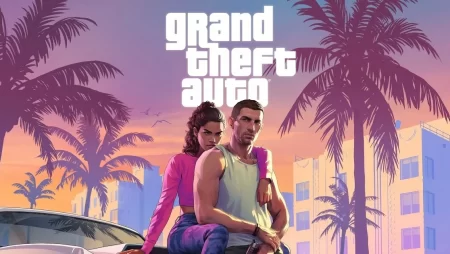
GTA 6. Everything we know so far [Release, editions, and pre-orders]
To say that people were excited about the GTA 6 news would be an understatement. One of the most popular RPG games ever made has finally received its first trailer.

How to Save Money on PC Games by Choosing the Right Edition: Standard, Deluxe or Ultimate
How to save money on PC games: compare Standard, Deluxe and Ultimate editions, season passes, early access and later upgrades before you buy.

GTA Games in Order: The Complete History of Grand Theft Auto
Find out how Grand Theft Auto grew from a 1997 top-down crime game into one of the best-selling franchises ever made. This guide lists all GTA games in order of release and recaps each one: the story, the gameplay, and its impact on the industry.