
The best Lord of the Rings video games
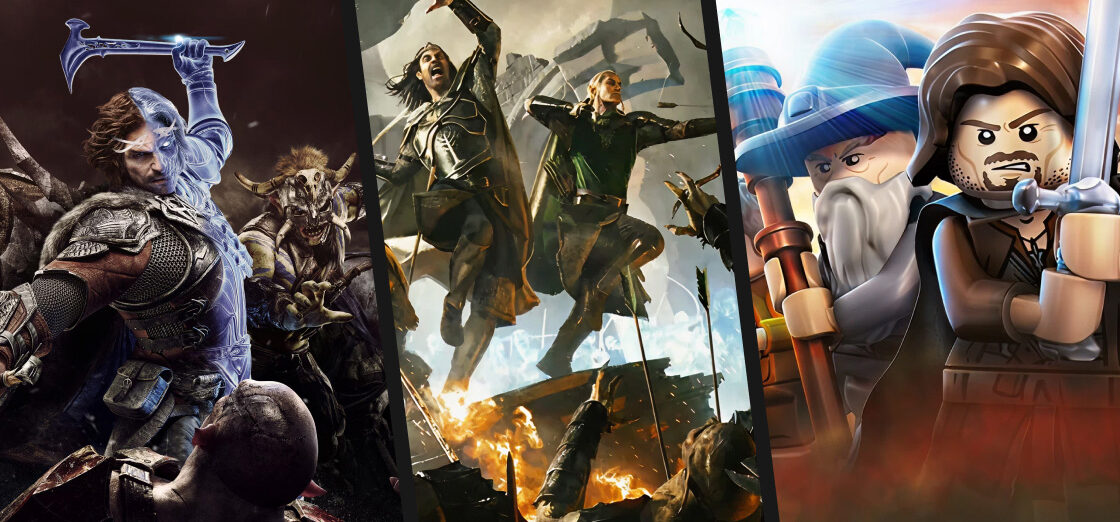
Middle-earth has captivated audiences for decades through books and films, but some of its most memorable adventures have unfolded through video games. From epic MMORPGs that let you explore every corner of Tolkien’s world to action-packed adventures that put you in the boots of legendary heroes, Lord of the Rings games have offered fans unique ways to experience their favorite fantasy universe.
The Lord of the Rings Online
Launched in 2007, The Lord of the Rings Online remains the definitive way to explore Middle-earth as a living, breathing world. This MMORPG allows players to create their own characters and journey alongside the Fellowship, experiencing key story moments while forging their own path through Tolkien’s legendary landscape.
The game excels at capturing the atmosphere of Middle-earth. You can visit iconic locations like Rivendell, Moria, and Rohan, each meticulously crafted to match Tolkien’s descriptions. The developers worked closely with Middle-earth Enterprises to ensure authenticity, resulting in a game that feels genuinely connected to the source material.
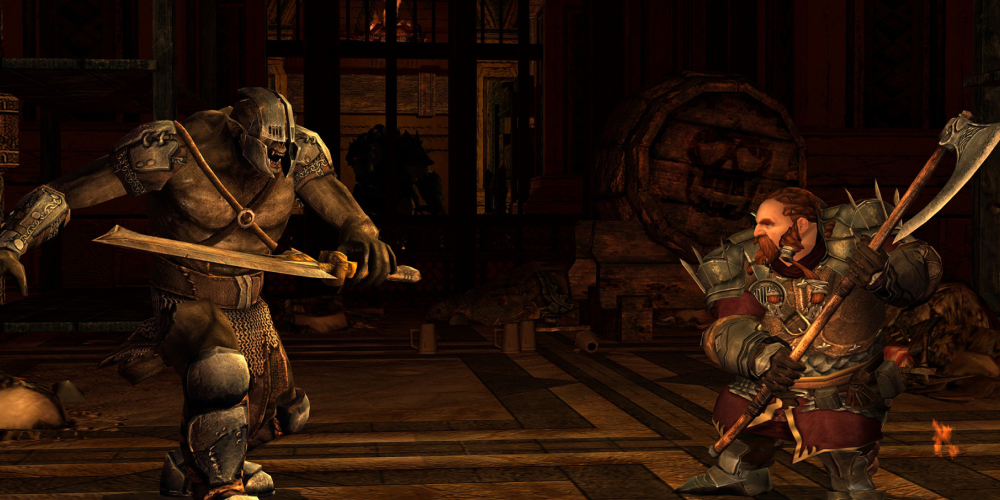
What sets LOTRO apart is its approach to storytelling. Rather than simply retelling the main quest, it explores the broader world during the War of the Ring. Players can participate in battles across different regions while the Fellowship pursues their mission, creating a sense that you’re part of a larger, interconnected story.
The game continues to receive regular updates and expansions, keeping the world fresh for both new and returning players. Its free-to-play model makes it accessible to anyone curious about exploring Middle-earth online, but players can purchase Turbine Points to enhance their experience.
The Lord of the Rings: The Return of the King
Released in 2003 to coincide with the final film, The Return of the King game delivered everything fans wanted from a movie tie-in. This action-adventure title featured actual footage and audio from the films, creating an authentic cinematic experience that complemented the movie perfectly.
Players could choose from multiple characters, including Aragorn, Legolas, Gimli, Frodo, Sam, and Gandalf, each with unique abilities and combat styles. The game’s cooperative mode allowed friends to team up and battle through iconic sequences like the Battle of Pelennor Fields and the destruction of the Ring.
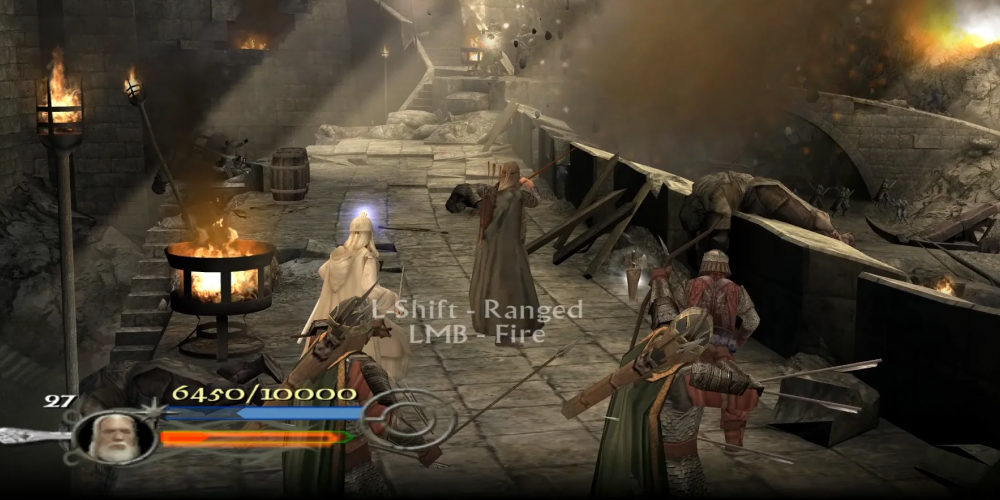
Combat felt satisfying and varied, with each character offering distinct gameplay experiences. Legolas excelled at ranged attacks, Gimli brought devastating melee power, and Aragorn balanced both approaches effectively. The progression system rewarded players with new moves and abilities, keeping battles engaging throughout.
The game’s presentation deserves special mention. High-quality cutscenes seamlessly blended with gameplay, making players feel like active participants in the film’s most memorable moments. Voice acting from the original cast added authenticity that many movie games lack.
Middle-earth: Shadow of Mordor
Shadow of Mordor revolutionized Lord of the Rings gaming when it launched in 2014. Set between The Hobbit and The Lord of the Rings, this action-adventure game introduced players to Talion, a ranger bonded with the wraith of Celebrimbor, the elf-lord who helped forge the Rings of Power.
The game’s standout feature was the Nemesis System, a dynamic mechanic that created unique relationships between players and enemy orcs. Defeated captains would remember previous encounters, growing stronger and developing personal vendettas. This system made every playthrough feel personal and unpredictable.
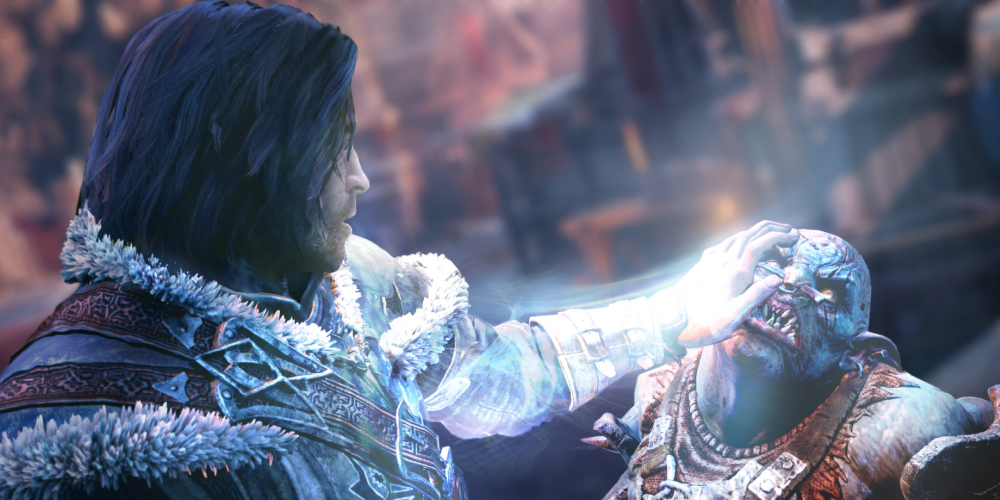
Combat borrowed heavily from the Batman: Arkham series, featuring fluid counters, brutal executions, and satisfying combo chains. The addition of wraith abilities added a supernatural element that fit perfectly with Talion’s unique circumstances.
Shadow of Mordor excelled at making players feel powerful while maintaining challenge through its intelligent enemy hierarchy. Climbing the ranks of orc society by eliminating captains and warchiefs created a compelling progression loop that kept players engaged for hours.
LEGO The Lord of the Rings
LEGO games have a reputation for making complex stories accessible and fun, and LEGO The Lord of the Rings exemplifies this approach perfectly. Released in 2012, this charming adventure retold the entire Lord of the Rings trilogy through LEGO’s signature humor and creativity.
The game featured an open-world Middle-earth that players could explore freely, complete with LEGO versions of iconic locations. Hobbiton, Isengard, and Minas Tirith all received the LEGO treatment, creating a whimsical yet recognizable version of Tolkien’s world.
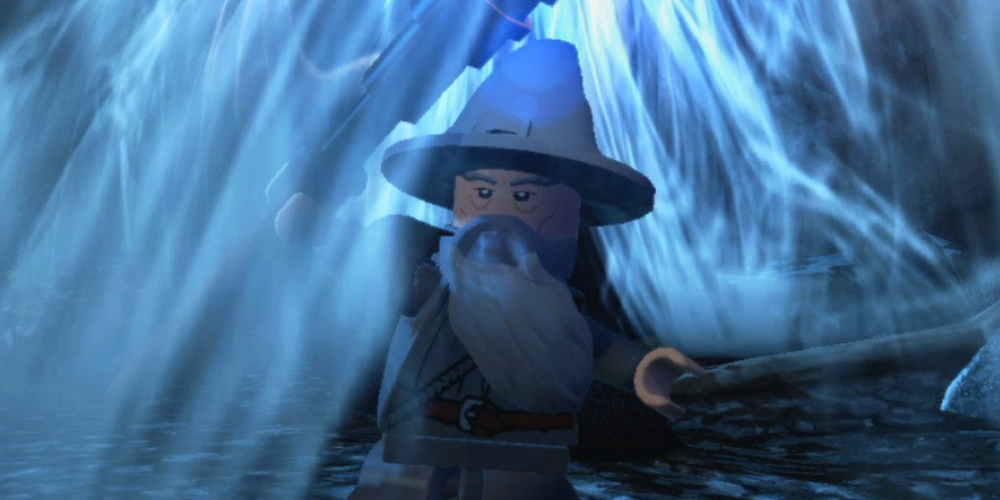
Character variety was impressive, with dozens of playable characters from the films, each possessing unique abilities needed to solve puzzles and access new areas. This design encouraged exploration and replay, as returning to previous levels with new characters often revealed hidden secrets and collectibles.
The humor struck a perfect balance between respecting the source material and adding LEGO’s trademark silliness. Dramatic moments retained their emotional impact while incorporating gentle comedy that enhanced rather than undermined the story.
Middle-earth: Shadow of War
The 2017 sequel to Shadow of Mordor expanded on its predecessor’s success while adding massive scope and ambition. Shadow of War introduced fortress sieges, army management, and an expanded Nemesis System that created even more complex relationships with orc followers and enemies.
The game’s fortress conquest mechanics allowed players to build armies of recruited orcs and assault enemy strongholds in epic battles. These sieges felt genuinely epic, with dozens of characters fighting simultaneously while players coordinated attacks and defended key positions.
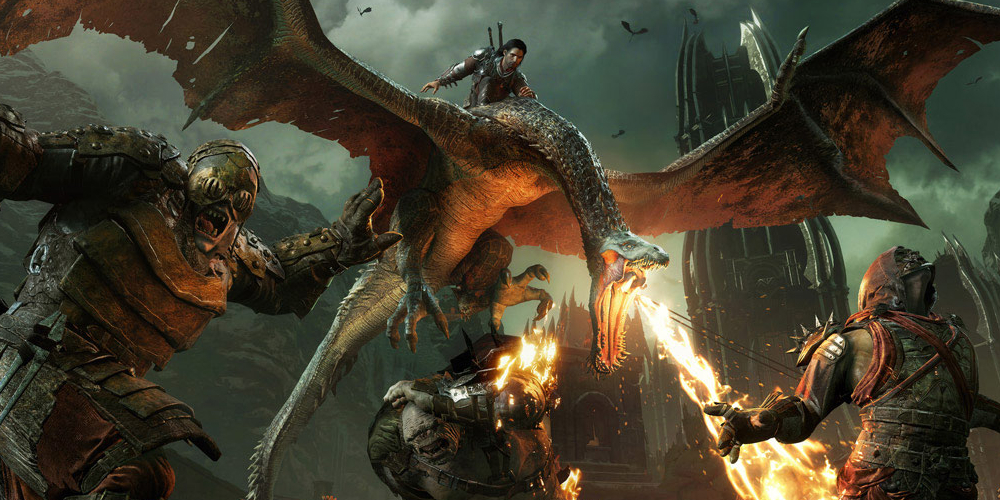
Character progression received significant improvements, with skill trees that allowed for diverse playstyles and approaches to combat. Players could focus on stealth, direct combat, or commanding their orc followers, with each path offering rewarding gameplay experiences.
The expanded Nemesis System created stories that felt uniquely personal. Orcs could betray you, be resurrected as undead enemies, or develop complex relationships that evolved throughout the campaign. These emergent narratives often proved more memorable than the main story itself.
The Lord of the Rings: The Battle for Middle-earth II
Real-time strategy games offer a different perspective on Middle-earth’s conflicts, and Battle for Middle-earth II delivered epic warfare on an impressive scale. Released in 2006, this RTS allowed players to command the forces of good and evil in massive battles across familiar locations.
The game featured extensive faction variety, with each army offering distinct units, buildings, and strategies. Playing as Gondor felt completely different from commanding the Ents of Fangorn or the cavalry of Rohan, ensuring that each campaign provided fresh tactical challenges.
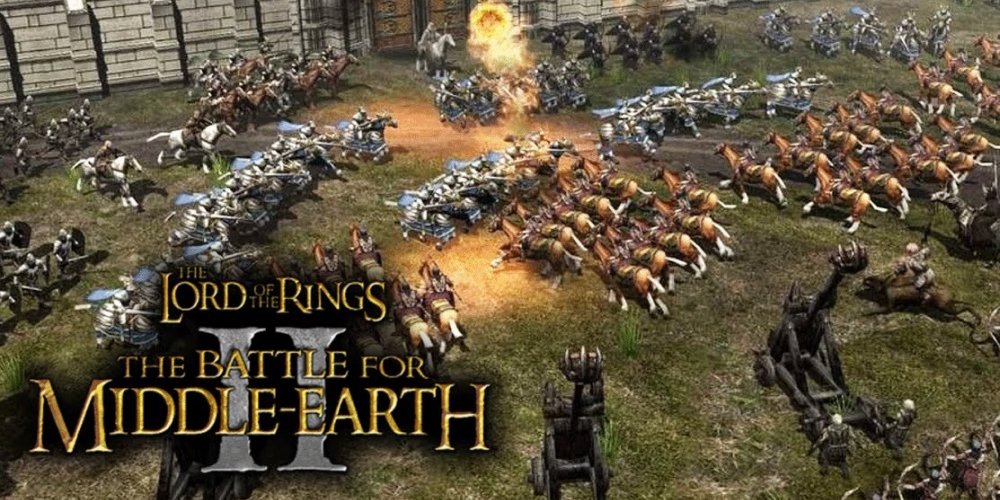
Hero units added personality and power to battles. Characters like Aragorn, Gimli, and Gandalf could turn the tide of conflicts while gaining experience and new abilities. Managing these powerful individuals alongside traditional army units created engaging strategic depth
.The create-a-hero feature allowed players to design custom characters and lead them through dedicated campaigns. This mode provided substantial replay value and let players create their own legendary figures within Middle-earth’s conflicts.
LEGO The Hobbit
A delightful action-adventure title developed by Traveller’s Tales and released in April 2014, LEGO The Hobbit brings the first two Peter Jackson, directed films, An Unexpected Journey and The Desolation of Smaug, into LEGO form.
Players guide Bilbo Baggins, Gandalf, and Thorin’s company of dwarves across an expansive open-world Middle-earth touring iconic locations like Hobbiton, Goblin-town, Rivendell, and Erebor while battling trolls, orcs, Gollum, and more.
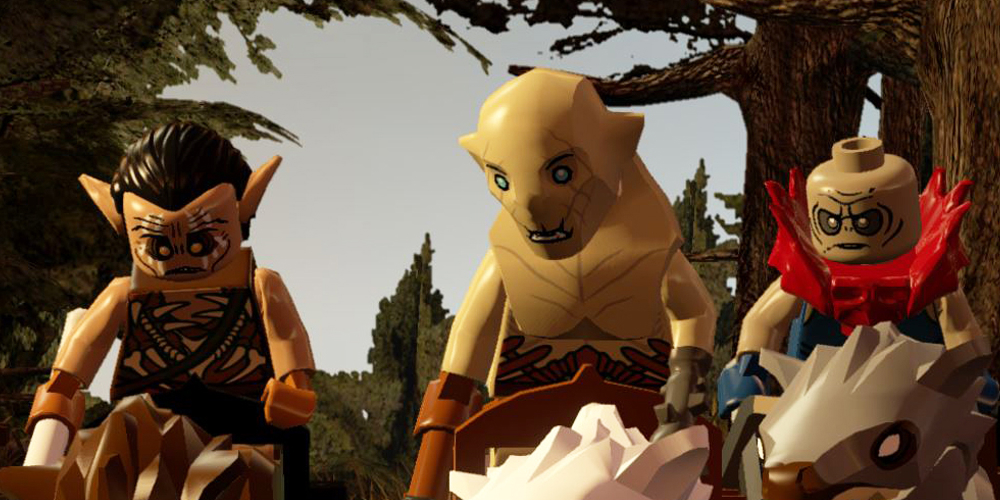
This game stands out in the LEGO series for its inventive mechanics: characters’ unique abilities like Bombur’s belly-bounce trampoline skill encourage creative teamwork and puzzle solving. It also introduces RPG-like elements such as mining for loot, crafting magical items, and constructing LEGO structures at workbenches.
Tales of the Shire
Released on July 29, 2025, this serene life-simulation game from Wētā Workshop invites players to step into the shoes of a custom Hobbit living in the picturesque village of Bywater, nestled in the heart of Middle-earth. Focusing on relaxation and charm, the game encourages a slower pace of life. Tend to your garden, forage for ingredients, fish by tranquil streams, and craft hearty Hobbit meals.

Through these simple yet meaningful activities, you’ll nurture relationships and help transform Bywater into a thriving, official community. Rather than epic battles, the game centers on life’s quieter joys: decorating your cozy Hobbit hole with a flexible, grid-free system and building a sense of community, one shared meal at a time.
Your next adventure awaits
These Lord of the Rings games demonstrate the incredible diversity possible within a single fictional universe. Whether you prefer massive online worlds, action-packed adventures, strategic warfare, or family-friendly exploration, Middle-earth has something to offer every type of gamer.
Many of these titles remain playable and enjoyable years after their initial release. The Lord of the Rings Online continues growing with new content, while older games like The Return of the King and LEGO Lord of the Rings can often be found at affordable prices on platforms such as GAMIVO!

GTA 6. Everything we know so far [Release, editions, and pre-orders]
To say that people were excited about the GTA 6 news would be an understatement. One of the most popular RPG games ever made has finally received its first trailer.

How to Save Money on PC Games by Choosing the Right Edition: Standard, Deluxe or Ultimate
How to save money on PC games: compare Standard, Deluxe and Ultimate editions, season passes, early access and later upgrades before you buy.
GTA Games in Order: The Complete History of Grand Theft Auto
Find out how Grand Theft Auto grew from a 1997 top-down crime game into one of the best-selling franchises ever made. This guide lists all GTA games in order of release and recaps each one: the story, the gameplay, and its impact on the industry.