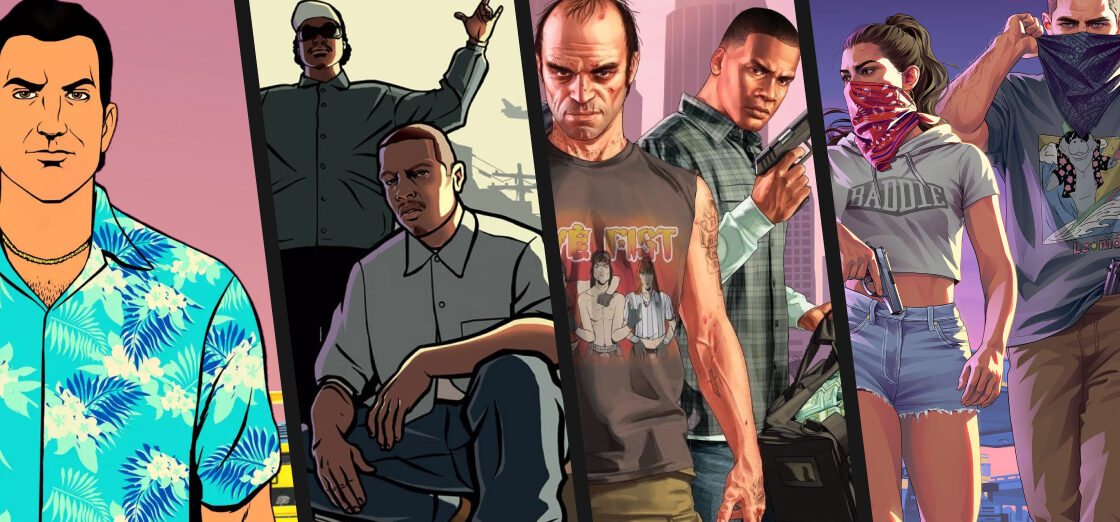
Few video game series have changed as much as Grand Theft Auto. It began in 1997 as a top-down crime game from a small Scottish studio, and has grown into one of the best-selling entertainment franchises ever made, with roughly 470 million copies shipped. This guide lists all GTA games in order of release, from the original Grand Theft Auto to the upcoming GTA VI. We will walk through each one: how it was made, what its story is about, what it added to the gameplay, and how it was received.
Table of contents
- All GTA Games in Order: A Quick Breakdown
- How Many GTA Games Are There?
- Grand Theft Auto (1997): Where It All Began
- Grand Theft Auto 2 (1999): A Retro-Futuristic Detour
- Grand Theft Auto III (2001): The Jump to 3D
- GTA: Vice City (2002): Neon, Synths, and a Voiced Protagonist
- GTA: San Andreas (2004): The Biggest GTA Yet
- GTA Advance (2004): A Top-Down Throwback on Game Boy
- GTA: Liberty City Stories (2005): Full 3D GTA in Your Pocket
- GTA: Vice City Stories (2006): Building an Empire in 1984
- Grand Theft Auto IV (2008): A Darker, More Realistic Liberty City
- GTA: Chinatown Wars (2009): Back to the Top-Down View
- Grand Theft Auto V (2013): Three Protagonists and a Billion-Dollar Launch
- Grand Theft Auto VI (2026): What We Know So Far
- GTA Timeline in Chronological Order
- How GTA Changed the Games Industry
- Which GTA Game Should You Play First?
- GTA Games in Order: FAQ
All GTA Games in Order: A Quick Breakdown
Before we dig deeper, here is a table that shows every GTA game in order of release, together with its setting, the in-game year, and the universe it belongs to. Expansions and handheld spin-offs are included, because several of them were close to full-sized adventures.
| Game | Release year | Platforms | Setting | In-game year | Universe |
|---|---|---|---|---|---|
| Grand Theft Auto | 1997 | PC, PlayStation, Game Boy Color | Liberty City, San Andreas, Vice City | Not specified | 2D |
| GTA: London 1969 | 1999 | PC, PlayStation | London | 1969 | 2D |
| GTA: London 1961 | 1999 | PC | London | 1961 | 2D |
| Grand Theft Auto 2 | 1999 | PC, PlayStation, Dreamcast, Game Boy Color | Anywhere City | Not specified | 2D |
| Grand Theft Auto III | 2001 | PS2, PC, Xbox | Liberty City | 2001 | 3D |
| GTA: Vice City | 2002 | PS2, PC, Xbox | Vice City | 1986 | 3D |
| GTA: San Andreas | 2004 | PS2, PC, Xbox | Los Santos, San Fierro, Las Venturas | 1992 | 3D |
| GTA Advance | 2004 | Game Boy Advance | Liberty City | 2000 | 3D |
| GTA: Liberty City Stories | 2005 | PSP, PS2 | Liberty City | 1998 | 3D |
| GTA: Vice City Stories | 2006 | PSP, PS2 | Vice City | 1984 | 3D |
| Grand Theft Auto IV | 2008 | PS3, Xbox 360, PC | Liberty City | 2008 | HD |
| GTA IV: The Lost and Damned | 2009 | Xbox 360, PS3, PC | Liberty City | 2008 | HD |
| GTA IV: The Ballad of Gay Tony | 2009 | Xbox 360, PS3, PC | Liberty City | 2008 | HD |
| GTA: Chinatown Wars | 2009 | Nintendo DS, PSP, iOS, Android | Liberty City | 2009 | HD |
| Grand Theft Auto V | 2013 | PS3, Xbox 360; later PS4, Xbox One, PC, PS5, Xbox Series X|S | Los Santos and Blaine County | 2013 | HD |
| Grand Theft Auto VI | Nov 2026 (scheduled) | PS5, Xbox Series X|S | Leonida, including Vice City | Present day | Not confirmed |
How Many GTA Games Are There?
There are seven main Grand Theft Auto games: Grand Theft Auto, Grand Theft Auto 2, GTA III, Vice City, San Andreas, GTA IV, and GTA V. GTA VI, scheduled for November 19, 2026, will make it eight.
If you count every standalone release, the total is 15. That is the seven main games plus four expansions (the two London packs and the two Liberty City episodes for GTA IV) and four handheld spin-offs (Advance, Liberty City Stories, Vice City Stories, and Chinatown Wars). The extras deserve a place on the list, because many of them had their own characters, maps, and full campaigns. GTA Online is not counted separately, since it is the multiplayer side of GTA V. Remasters and ports are not counted either.
Grand Theft Auto (1997): Where It All Began
Grand Theft Auto launched on PC in Europe on November 28, 1997, followed by a PlayStation version two weeks later, and North American releases came in 1998. A Game Boy Color version arrived in 1999.
The game was made by DMA Design in Dundee, Scotland, and development started in April 1995. The project began under the working title Race’n’Chase, and the player was supposed to be a police officer chasing criminals. The developers found that boring and flipped the idea, so you play the criminal instead. One of the studio’s creative leads has named the classic space trading game Elite as a major influence. The whole thing took about four years to finish.
There is no big plot here. You choose one of eight characters (only four on PlayStation), but the choice is purely cosmetic. The action takes place in three fictional cities based on real ones: Liberty City (New York), San Andreas (San Francisco), and Vice City (Miami). You take jobs from local crime syndicates, which you pick up at telephone boxes, and each of the game’s six levels sets a points target that starts at $1,000,000.
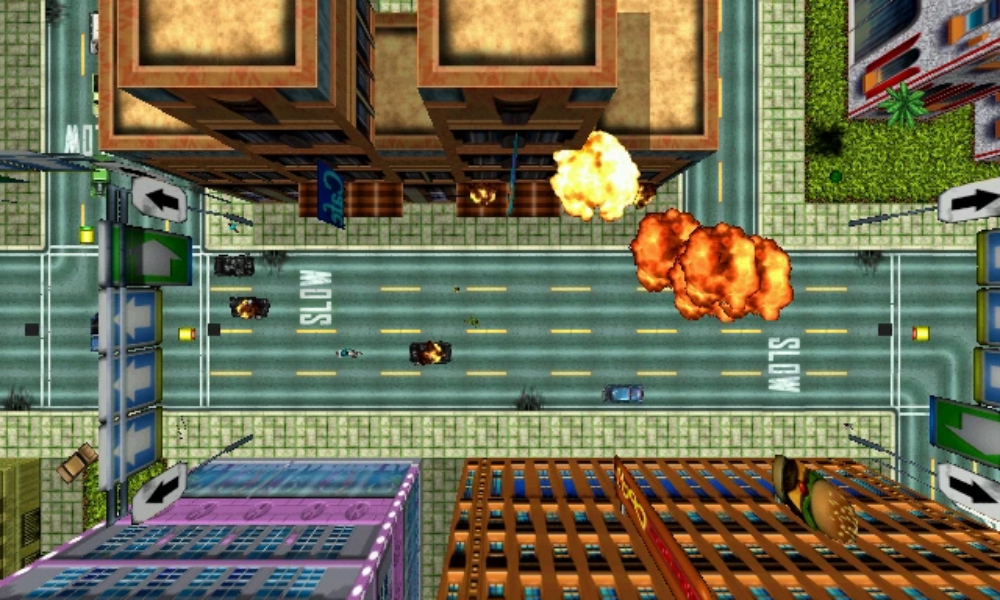
The gameplay is seen from above, in an open city where you can steal any car and go wherever you like. Almost everything you do earns points, and a multiplier rewards you for staying alive and out of trouble. Dying resets the multiplier and costs a life, while getting arrested cuts it in half. The police react to your crimes, and the higher your notoriety, the tougher the response gets. On PC, the game also supported multiplayer over a network.
Critics were divided. They criticized the graphics and the controls but praised the freedom, the sound, and the sheer fun of causing chaos. The game was also controversial before it came out, with calls for a ban, and publicist Max Clifford used the outrage as free marketing. It worked: the game sold 3.5 million copies by October 1999 and 6 million by March 2001. Everything that made the series famous later, from free roaming to the wanted level, started here.
GTA: London 1969 and London 1961 (1999): A Trip to 1960s London
Rockstar Games did not exist yet when the original game came out in 1997. BMG Interactive published it, and in March 1998 Take-Two Interactive bought BMG’s assets, including Grand Theft Auto. Former BMG staff, among them Sam and Dan Houser, founded Rockstar Games as Take-Two’s publishing label that December. The London packs were among its first projects, made by its in-house studio, Rockstar Canada.
GTA: London 1969 came out on April 30, 1999, for PC and PlayStation. On PC it was an expansion that needed the original game. It sends you to a fictionalized London in the 1960s, and the changes compared to the original are mostly cosmetic: period cars, British slang (you get “nicked” instead of “busted”), and a new map. The mechanics stay the same.
GTA: London 1961 followed on July 1, 1999. It was a free download for PC owners of London 1969, used the same map and characters, and was set eight years earlier. It was a much shorter experience. Reviews of the pack were mixed, since critics saw little improvement over the original, but the audio was widely praised and the pack topped the UK charts in its first two weeks.
Grand Theft Auto 2 (1999): A Retro-Futuristic Detour
Grand Theft Auto 2 was released on October 22, 1999, for PC and PlayStation. A Dreamcast version followed in May 2000, and a Game Boy Color version in December 2000. DMA Design again led development, and Rockstar Games published the game.
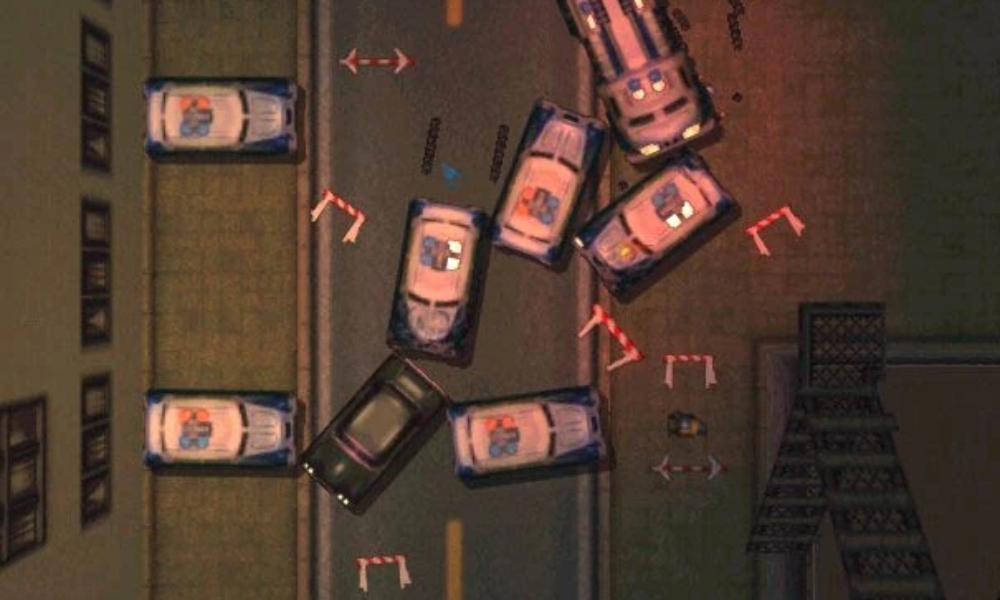
The sequel moves the action to Anywhere City, a retro-futuristic metropolis split into Downtown, Residential, and Industrial districts. The exact period is never spelled out, though references to the approaching new millennium suggest something close to 1999. You play Claude Speed, a criminal who takes jobs from rival gangs, and the game opens with an eight-minute live-action short film shot in New York from a script by Dan Houser.
The big new idea is the respect system. Three gangs offer work on each level (two that are unique to that level and one that appears throughout), and completing jobs for a gang earns its respect and unlocks tougher assignments. The catch is that every gang has enemies, so helping one makes its rivals hostile toward you. Other changes were smaller but useful. You now have a health meter, garages that upgrade your vehicle, taxi and truck-driving side jobs, and hidden packages to collect. Pedestrians and traffic react more to what is happening around them, so gang fights and police clashes can break out on their own, and muggers and other criminals roam the streets. Saving the game costs points, and dying or getting arrested strips your equipment and resets your multiplier.
Reviews were mixed. Critics praised the soundtrack and the gang loyalty mechanic, but many felt the game failed to move far beyond its predecessor, and the graphics drew complaints. Still, about 2 million copies sold worldwide. GTA 2 is the last main game in the top-down style. The next numbered entry would change the series completely.
Grand Theft Auto III (2001): The Jump to 3D
Grand Theft Auto III arrived on PlayStation 2 on October 23, 2001, in North America and on October 26 in Europe. A Windows version followed in May 2002, an Xbox version in November 2003, and mobile ports in December 2011.
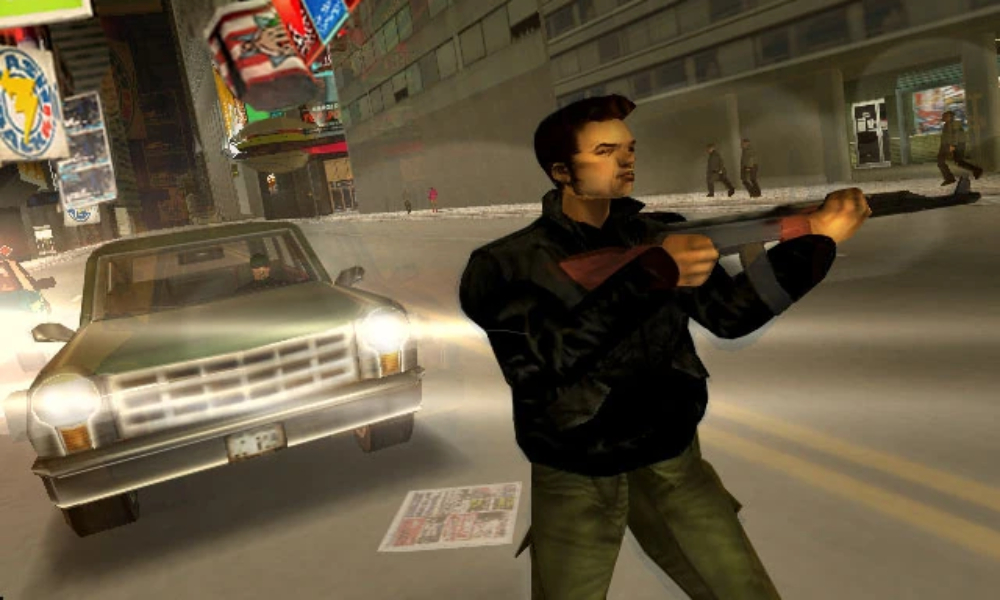
This is the game that turned GTA into the series we know today. DMA Design, working with Rockstar’s New York office, built a fully 3D city for the first time. The first prototype actually ran on the Dreamcast, and the team switched to the PlayStation 2 after about four months. Online multiplayer was planned, but it was cut because of time and resources. The studio itself would soon be renamed Rockstar North.
The story is set in Liberty City, a loose take on New York spread across three islands: Portland, Staunton Island, and Shoreside Vale. You play Claude, a silent protagonist who is never named in the game. After being betrayed during a bank heist, he sets out for revenge on his ex-girlfriend, and the missions pull him into the city’s gangs, one job at a time.
On the gameplay side, GTA III combined everything the series had tried before into a 3D open world. You can walk or drive anywhere on the map, take on story missions in order or ignore them for optional side jobs such as vigilante missions, firefighting, paramedic work, and taxi driving, and attract a police response that escalates up to six wanted stars. Radio stations became part of the experience, with about three and a half hours of audio that included talk radio. Players could also use auto-aim and shoot from moving cars.
The September 11 attacks hit the game just weeks before launch. Rockstar delayed the release by about three weeks, changed the police cars from a blue-and-white livery to black and white, altered the flight path of a plane, removed a mission with a terrorism theme, and replaced the cover art, which the company said felt too raw after the attacks.
Critics loved it. The PlayStation 2 version scored 97 on Metacritic, it was the best-selling game in the United States in 2001, and it sold about 14.5 million copies by March 2008. It is widely credited with popularizing the open-world genre. People even crafted the term, to put it bluntly, “GTA Clone”.
In 2021, the game returned in a remastered package called GTA: The Trilogy – The Definitive Edition, which also includes Vice City and San Andreas. It launched with technical problems and weak reviews and has been patched since. Players who would rather get all three classics in one package can find GTA: The Trilogy – The Definitive Edition on GAMIVO.
GTA: Vice City (2002): Neon, Synths, and a Voiced Protagonist
GTA: Vice City was released on October 29, 2002, in North America and on November 8 in Europe, exclusively for PlayStation 2. The Windows version came in May 2003, and the Xbox version in November 2003. Mobile ports followed in December 2012.
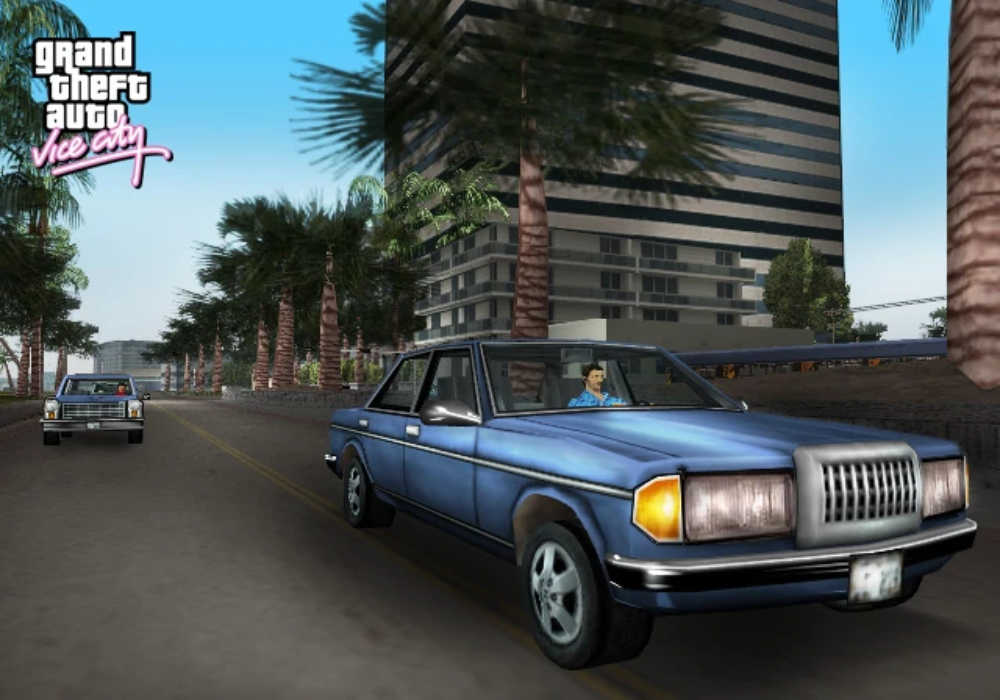
Rockstar North developed it in roughly eighteen months. It started out as a possible mission pack for GTA III, but it grew into a standalone game with a much larger map, two main islands that open up as the story goes on. The team did field research in Miami, and the influences were easy to spot: the films Scarface and Carlito’s Way, as well as the TV series Miami Vice.
The setting is Vice City in 1986, a fictional version of Miami. You play Tommy Vercetti, voiced by Ray Liotta, a criminal who is released from prison and gets caught up in a drug deal that ends in an ambush. From there, he sets out to build his own criminal empire. After the silent Claude of GTA III, a fully voiced lead with a personality changed the tone of the series, and the game has about four times as much dialogue as its predecessor.
Vice City also added a lot of gameplay. Motorcycles and helicopters joined the list of vehicles, the arsenal grew, and some missions can run in parallel. You can buy properties to use as hideouts and take over businesses such as a film studio, a taxi company, and clubs, which generate income once their missions are done. The soundtrack deserves a mention of its own: about nine hours of music, over 113 songs and commercials across the radio stations, and talk radio roughly three times as extensive as in III. The licensed 1980s music became one of the game’s trademarks.
All of this sounds pretty modern if you think about it. And I want to point out again that this was 2002.
At the time, Vice City was the fastest-selling game ever, with 1.4 million copies in two days, and it was the best-selling game of 2002 in the United States. It sold about 17.5 million copies by March 2008 and won six awards at the first British Academy Games Awards. It was not free of controversy, though. In 2003, Haitian groups protested how the game portrayed Haitians, Rockstar apologized, and some offensive lines were removed after a legal threat from the mayor of New York City.
Vice City is also coming back: the city is the center of GTA VI.
GTA: San Andreas (2004): The Biggest GTA Yet
GTA: San Andreas came out on PlayStation 2 in late October 2004. Windows and Xbox versions followed in June 2005, and later ports reached mobile devices in 2013, Xbox 360 in 2014, and PlayStation 3 in 2015. Rockstar North made it, and the game was part of the 2021 Definitive Edition.
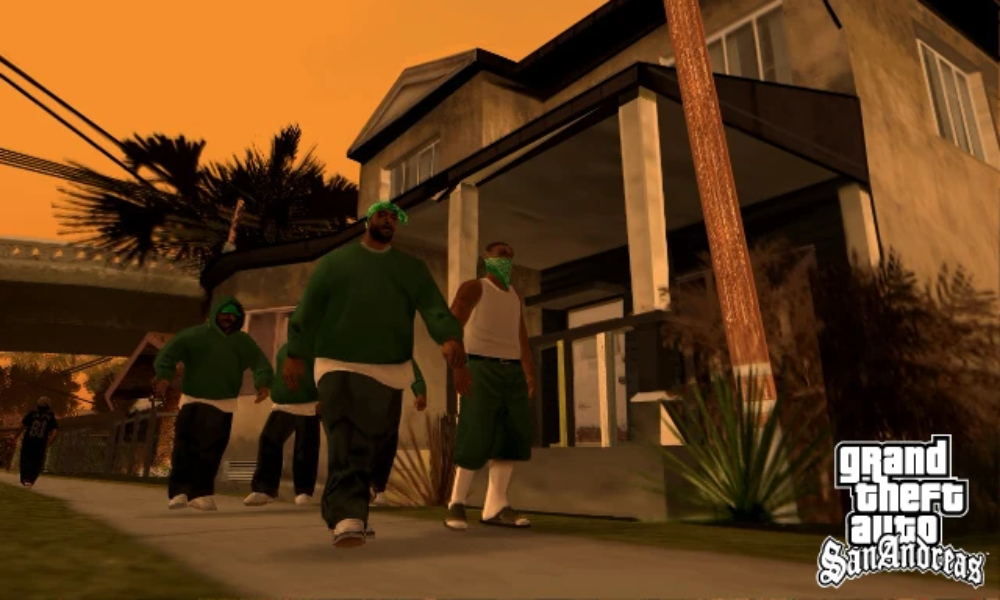
San Andreas is a fictional state inspired by California and Nevada, and the game is set in 1992. It has three cities, Los Santos, San Fierro, and Las Venturas, with countryside between them. The map covers roughly 36 square kilometers, which is four to six times larger than the maps of III or Vice City. There are also more than 180 vehicles to traverse the world.
You play as Carl “CJ” Johnson, who returns home to Los Santos after his mother’s death. CJ finds his gang in poor shape. The story follows his attempt to rebuild it while dealing with corrupt cops and rival gangs. It is a story about family, loyalty, and gang rivalry.
San Andreas also sets up the story of GTA III. Catalina, a criminal CJ becomes involved with in Red County, is the same woman who betrays Claude in Liberty City nine years later, and Claude himself shows up as a minor character: after losing a race to CJ, he gives up his garage and leaves San Andreas with her (my man dodged the bullet there…).
The game brought role-playing elements to the series. CJ has stats for stamina, muscle, and fat that change depending on how he eats and trains, and skills such as driving and lung capacity unlock new abilities. You can spend money on clothes, hairstyles, and tattoos, learn three fighting styles at the gym, build respect with friends, and date six women. Combat includes dual-wielding weapons and drive-by shootings. To take over a rival gang’s territory, you must survive three waves of enemies, and later you have to defend it from counterattacks. On PS2, PS3, and Xbox 360, there was also a two-player mode that let two people roam the state together.
The game sold 4.5 million copies in its first week. With about 27.5 million copies sold overall, including 17.33 million on PlayStation 2, it is the best-selling game on that console. San Andreas quickly became iconic. And a lot of the credit goes to memes. And you know exactly which ones I’m talking about.
San Andreas also caused the series’ biggest scandal. The code contained a hidden sexual minigame that modders unlocked after the release. The ESRB re-rated the game Adults Only, Australia banned it until the content was removed, and the FTC warned Rockstar and its parent company. In response, the ESRB introduced fines of up to $1 million for developers who fail to disclose graphic content in their games.
GTA Advance (2004): A Top-Down Throwback on Game Boy
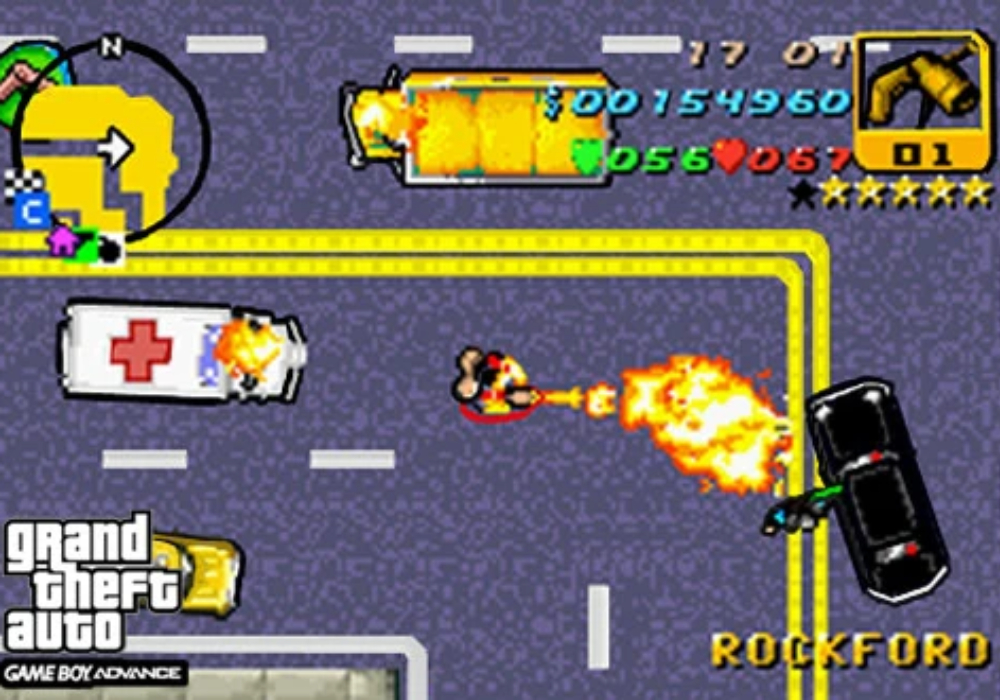
GTA Advance was released for Game Boy Advance on October 26, 2004, in North America and on October 29 in Europe. Digital Eclipse developed it, and Rockstar Games published it.
It is a prequel to GTA III, set in Liberty City in 2000, one year before the events of that game. You play Mike, a small-time criminal who wants revenge after his partner Vinnie apparently dies in a car bombing. The investigation pulls Mike deeper into organized crime, gang warfare, and corruption. Several characters from III, such as 8-Ball, King Courtney, and Asuka Kasen, appear here in earlier versions of themselves.
Advance looks like the first two games but plays like the 3D ones. It uses the same top-down 2D view, yet it includes vehicle side missions, most of III’s weapons, safe houses, and a similar interface. The story is told through text boxes with hand-drawn portraits, and there are no radio stations.
Reviews were mixed. Critics were divided over the graphics and the music. It remains an oddity: a prequel to a 3D game that is played like a 1997 one.
GTA: Liberty City Stories (2005): Full 3D GTA in Your Pocket
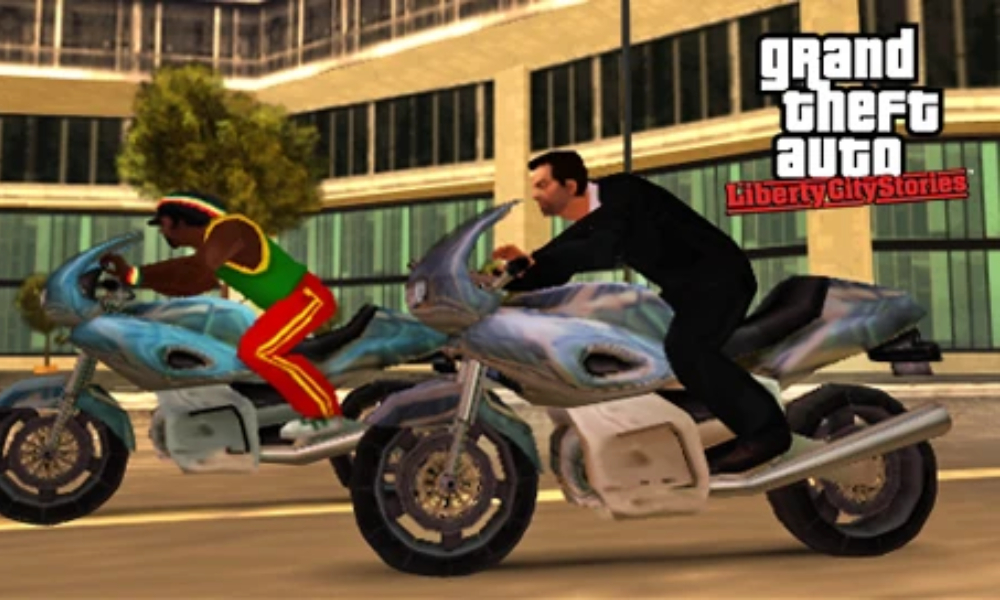
GTA: Liberty City Stories launched on the PlayStation Portable on October 25, 2005, in North America and on November 4 in Europe. A PlayStation 2 port followed in June 2006, and mobile versions in 2015 and 2016. Rockstar Leeds developed it, with help from Rockstar North.
It was the first 3D GTA on a handheld, and it returns to Liberty City in 1998, three years before GTA III. You play Toni Cipriani, a mobster who climbs through the ranks of the Leone crime family while being dragged into a power struggle among the city’s Mafia groups.
The map is similar to III’s. Toni cannot swim or climb, and deep water is fatal. There are no flyable planes, and helicopters can only be reached with exploits. The PSP version stood out with multiplayer for up to six players over ad hoc Wi-Fi, with seven modes, and it was also the only version with support for custom soundtracks. The multiplayer was removed from the PS2 and mobile versions.
The reception was strong: Metacritic gave the PSP version 88 and the PS2 version 78, and the game was nominated for Handheld Game of the Year at the Interactive Achievement Awards. It sold more than 8 million copies by March 2008.
GTA: Vice City Stories (2006): Building an Empire in 1984
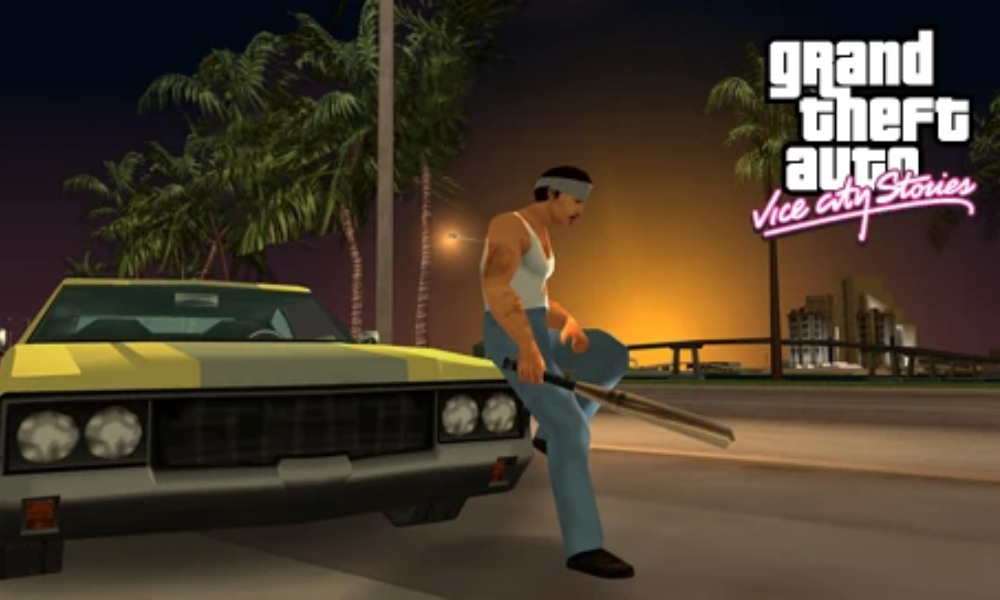
GTA: Vice City Stories was released for the PSP in October 2006, with a PlayStation 2 port following in March 2007. Rockstar Leeds and Rockstar North developed it, and Rockstar Games published it.
It is a prequel to Vice City, set in 1984, two years before Tommy Vercetti arrives. You play Victor “Vic” Vance, an ex-soldier who appeared as a minor character in the earlier game. After being framed and discharged from the army, Vic is pushed into the drug trade to pay for his brother’s medication, and he builds a criminal empire together with his other brother, Lance.
The empire-building mechanic was new for the series. You take over businesses from rival gangs and then run them for income, whether it is a protection racket, a brothel, or a smuggling compound. Rival gangs occasionally try to take them back, so you have to defend what you have built. The game also added Beach Patrol side activities, an overhauled combat system with grappling, throws, and the ability to bribe police officers and hospital staff.
The multiplayer mode, for up to six players with ten modes, was only on the PSP. The PS2 port has improved graphics and a longer draw distance, but IGN criticized it for fixing few of the original’s issues. The game has sold more than 7 million copies and is one of the best-selling PSP games ever.
Grand Theft Auto IV (2008): A Darker, More Realistic Liberty City
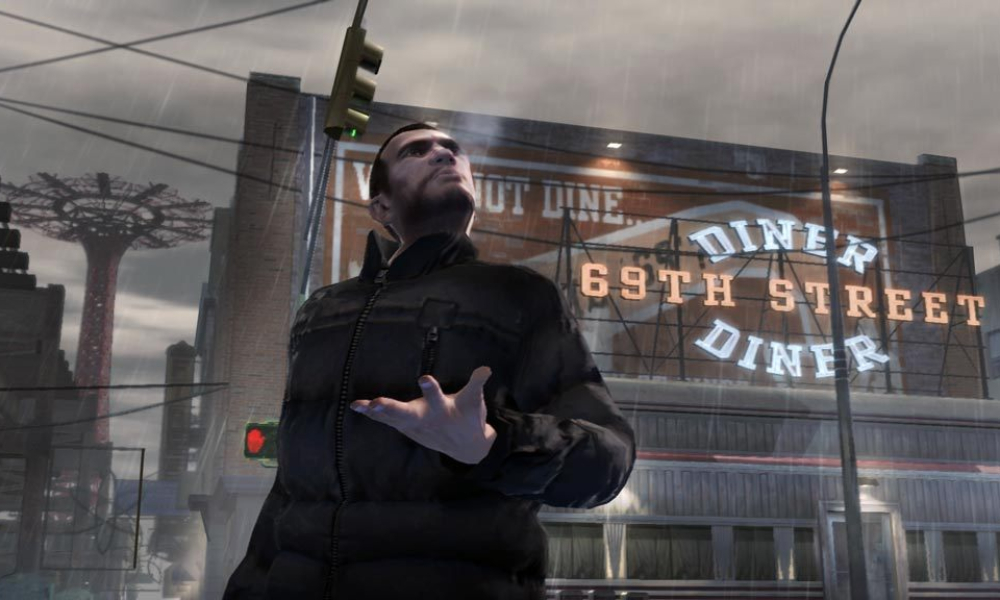
Grand Theft Auto IV was released worldwide on April 29, 2008, for PlayStation 3 and Xbox 360. The Windows version followed in December 2008. Rockstar North developed it, and the game was published by Rockstar Games.
Development started in late 2004, shortly after San Andreas, and involved more than 1,000 people across Rockstar’s studios. The budget reportedly exceeded $100 million, which made it one of the most expensive games ever made at that point. The team took more than 100,000 photos in New York for reference. GTA IV runs on Rockstar’s own RAGE engine and uses Euphoria physics software. IV toned down the silliness of the earlier games in favor of a more realistic world and a more mature story about the false premise of the American dream.
The story is set in Liberty City in 2008, now a detailed take on New York, with Alderney based on New Jersey. You play as Niko Bellic, an Eastern European ex-soldier who moves to the city to leave his past behind and chase the American dream. His cousin Roman is the reason he comes, and the criminals around Roman pull him into their conflicts. It is a darker, more personal immigrant story, and a clear step away from the tone of the earlier games.
Several gameplay features changed too. There is a cover system and targeting of individual body parts. Niko’s cell phone is the hub for contacting friends, building respect, unlocking favors such as free cab rides, and joining online multiplayer. Internet cafés let him use the in-game internet and arrange dates, and some story choices change how the plot plays out. Online multiplayer supports up to 16 players on consoles and 32 on Windows.
With a Metacritic score of 98 for the console versions, critics were nearly unanimous. It was a big success. The game sold 3.6 million copies and earned about $310 million in its first 24 hours, then passed $500 million in its first week. It sold over 25 million copies by July 2013. There were some hiccups that have not been fixed to this day. I’m talking especially about the PC version, which had very poor optimization and lots of bugs and glitches.
The controversies came as usual, with Mothers Against Drunk Driving criticizing the ability to drive drunk, New York City officials objecting to the portrayal of their city, and Thailand banning the game after a 2008 murder.
Episodes from Liberty City: The Lost and Damned and The Ballad of Gay Tony (2009)
Rockstar released two expansions for GTA IV in 2009. They take place in the same city and at the same time as the main story, and the storylines cross paths.
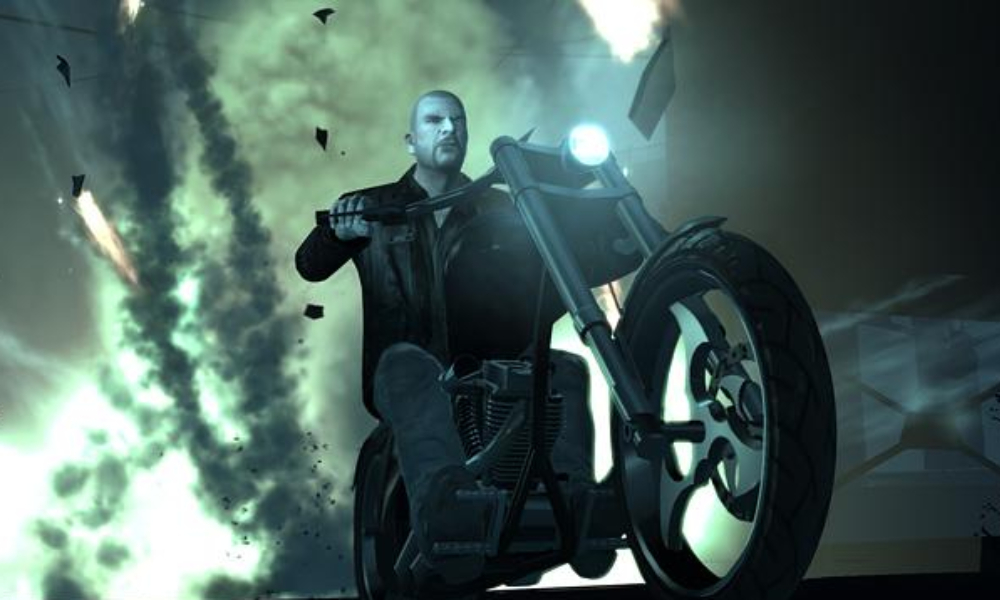
GTA IV: The Lost and Damned came out on Xbox 360 on February 17, 2009. You play Johnny Klebitz, vice president of the Liberty City chapter of the outlaw motorcycle club The Lost MC, who tries to keep the chapter together amid internal conflict, gang warfare, and drug running. The bike handling is much improved, and there are gang wars, bike races, backup from fellow members, and mid-mission checkpoints. It is shorter than the main game, with about 10 to 15 hours of play.
GTA IV: The Ballad of Gay Tony followed on October 29, 2009, also on Xbox 360. Here you are Luis Lopez, a former drug dealer who works as the bodyguard and business partner of nightclub owner Tony Prince. The game is built around the nightclub scene, with club management jobs, BASE jumping with a parachute, an underground fight tournament, and minigames such as golf, dancing, and air hockey. You can also replay missions for a score. It won Best DLC at the 2009 Spike Video Game Awards. It is also a reminder that Rockstar put a gay character at the center of a GTA story back in 2009, long before today’s arguments about “woke.” Reviewers praised the way the game portrayed Tony. In 2013, Complex ranked him the coolest LGBT character in video games.
GTA: Chinatown Wars (2009): Back to the Top-Down View
GTA: Chinatown Wars was released for the Nintendo DS in March 2009 in North America. A PSP version followed in October 2009, iOS in January 2010, and Android and Fire OS in December 2014. Rockstar Leeds developed it with Rockstar North.
The game is set in a scaled-down version of GTA IV’s Liberty City in the modern day, without the Alderney area. You play Huang Lee, a member of the Triads who is trying to recover a family sword stolen after his father’s murder. The search draws him into the Triads’ internal power struggle and the city’s drug trade.
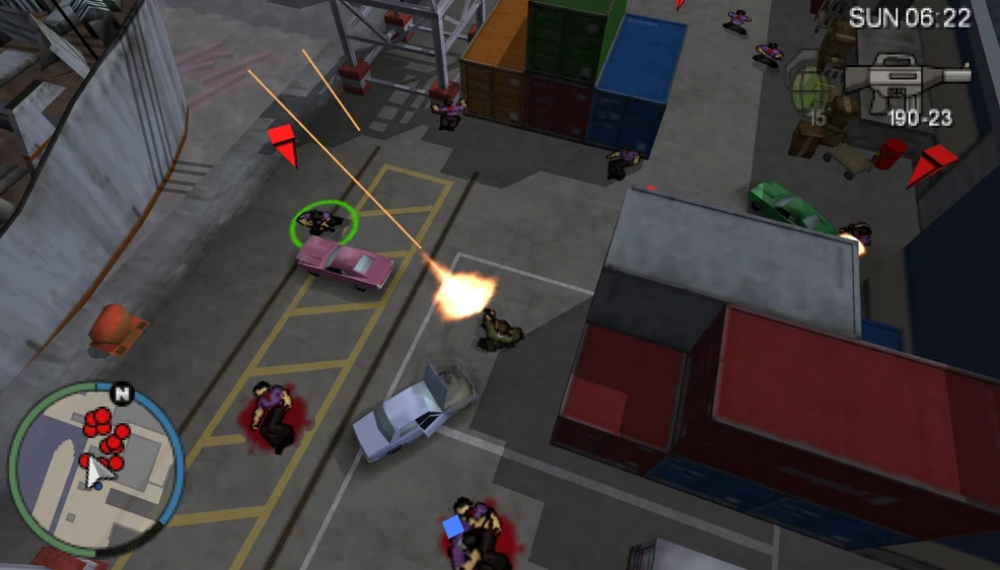
The series returned to a top-down view, but with a camera that can rotate. The DS version also used cel-shaded graphics with black outlines for a comic-book look, a first in the series. Players could lose their wanted stars by destroying police cars instead of simply running away. The touch screen handled the PDA, GPS, radio, and throwing weapons. Stealing cars is no longer one-size-fits-all: older cars need a screwdriver, others need hotwiring, and the newest ones need you to hack the immobilizer. The drug economy is the heart of the game. You buy from suppliers and sell to dealers, and prices change with location and demand. The PSP version added some missions and replaced the touch minigames with simpler ones.
With a Metacritic score of 93, the DS version was the highest-rated DS game on the site at the time. The PSP version scored 90 and the iOS version 91. The game won Best Handheld Game at the 2009 Spike Video Game Awards. The sales, however, were modest: just under 90,000 copies in the United States in the first two weeks. The drug-dealing mechanic also drew criticism from anti-drug organizations.
Grand Theft Auto V (2013): Three Protagonists and a Billion-Dollar Launch
Grand Theft Auto V was released on PlayStation 3 and Xbox 360 on September 17, 2013. PlayStation 4 and Xbox One versions with a first-person view followed on November 18, 2014, the PC version on April 14, 2015, and an expanded and enhanced edition for PlayStation 5 and Xbox Series X|S on March 15, 2022. PC players received the same enhancements in a free update on March 4, 2025.
Rockstar North led the development, with help from several other Rockstar studios, and work started in 2008, around the release of GTA IV. The development and marketing budget was reported to be more than £170 million ($265 million), which made it the most expensive game at the time.
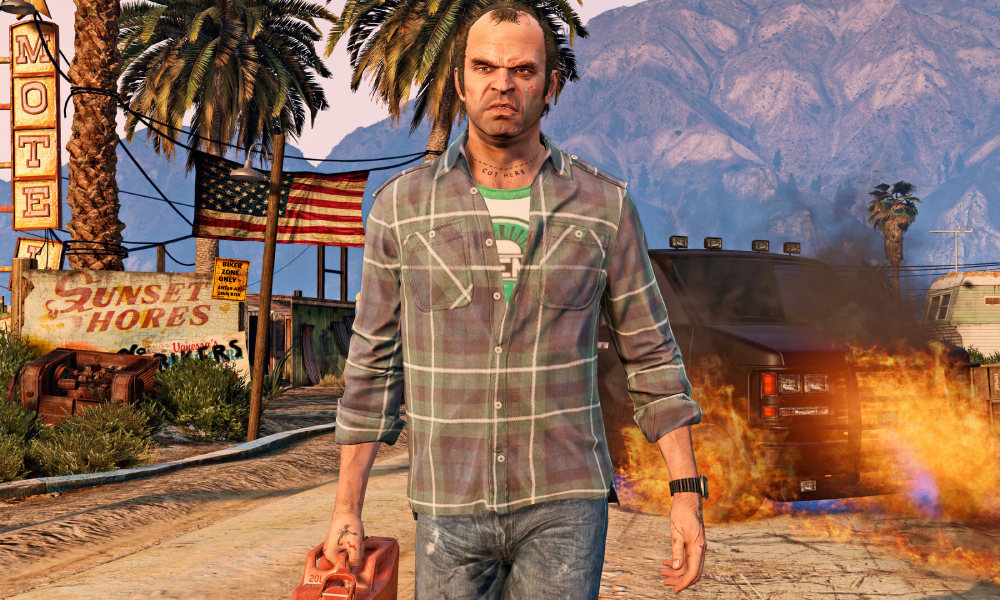
The game is set in 2013 in the state of San Andreas, based on Southern California. The action takes place in Los Santos, based on Los Angeles, and in the surrounding Blaine County. For the first time in the series, you play three characters: Michael De Santa, Franklin Clinton, and Trevor Philips. You can switch between them freely, both during missions and outside of them. The three leads work together on heists, which are central to the game. The heists come with AI accomplices, and in some cases, they can be approached in more than one way.
The rest of the gameplay builds on what IV started: auto-aim, a cover system, and a wanted system that escalates the police response.
The sales numbers are staggering. GTA V earned about $815 million in its first 24 hours and passed $1 billion in three days, which made it the fastest-selling entertainment product in history, and Guinness World Records recognized seven records for the game on October 8, 2013. It received Game of the Year awards from several outlets. More than 230 million copies have shipped, making it the second best-selling video game of all time (not counting Tetris), and it had earned nearly $10 billion in revenue by May 2025.
If, by some miracle, you still have not played it, you can pick up GTA V on GAMIVO.
As always, there was criticism. The depiction of violence and women drew complaints, and the torture mission “By the Book” was widely condemned and cut from the Japanese release. Target and Kmart pulled the game from Australian stores in December 2014 after a petition.
GTA Online (2013–Today)
GTA Online launched on October 1, 2013, two weeks after GTA V. It is the multiplayer side of the game, a persistent version of San Andreas where players join lobbies for jobs, form crews of up to five, and build their own races and deathmatches with the Content Creator. The launch was rough, with connection problems and lost character progress. Rockstar patched the issues and paid players GTA$500,000 as compensation. It later arrived on PlayStation 4 and Xbox One in November 2014, on PC in April 2015, and as a standalone release for PlayStation 5 and Xbox Series X|S in March 2022.
The game kept growing through large free updates. Heists arrived on March 10, 2015, followed by Gunrunning and Smuggler’s Run in 2017, The Doomsday Heist in December 2017, The Diamond Casino & Resort in July 2019, The Cayo Perico Heist in 2020, and The Contract in December 2021. Updates were still arriving in 2025, such as Money Fronts in June and A Safehouse in the Hills in December, and a new heist was announced for 2026.
Online is also a business model. Players can buy in-game currency, and Take-Two said microtransactions were the largest contributor to its digital revenue after launch. A subscription called GTA+ followed in March 2022. By February 2014, Take-Two reported that 70 percent of GTA V players with internet access had tried the mode, and it won Best Multiplayer at the British Academy Games Awards.
Roleplay deserves a mention too, although it happens mostly outside GTA Online itself. On PC, roleplay servers built on FiveM, a fan-made multiplayer modification, grew into a phenomenon of their own. In February 2021, GTA V became the most-watched category on Twitch thanks to an update for NoPixel, one of the biggest roleplay servers, and in April 2021 FiveM reached 250,000 concurrent players on Steam. In August 2023, Rockstar acquired Cfx.re, the team behind FiveM.
Together, GTA Online and the roleplay scene have given a single game a life of more than a decade.
Grand Theft Auto VI (2026): What We Know So Far
Grand Theft Auto VI is scheduled for release on November 19, 2026, for PlayStation 5 and Xbox Series X|S. A PC version has not been announced by Rockstar, although unnamed sources report a possible release in early 2027.
The release date has already moved twice. The game was first expected in 2025, then set for May 26, 2026, and in November 2025 Rockstar pushed it to November 19, 2026, citing the need for additional polish. In August 2026, Take-Two said the game was not delayed again and that pre-orders were at “unprecedented” levels.
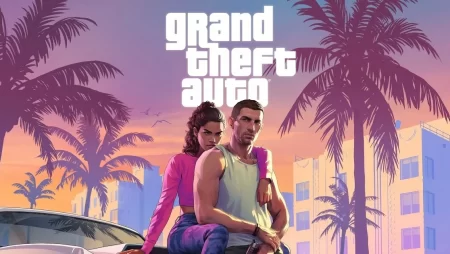
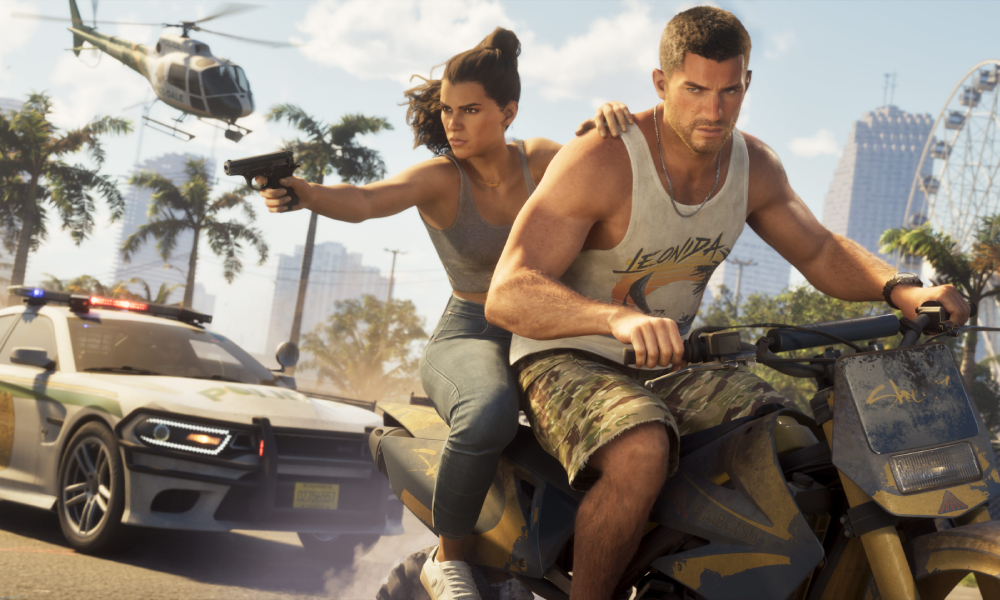
The game is set in Leonida, a fictional state based on Florida, and it includes a modern version of Vice City. Rockstar has confirmed two playable leads, Lucia and Jason. The first trailer arrived in December 2023, a day early because of a leak, and the second on May 6, 2025. Pre-orders opened on June 25, 2026, and an extended look followed on August 27, 2026. If you want the full breakdown, check our article on everything we know about GTA 6.
Rockstar has not revealed the details of the plot or said whether the game continues the HD Universe. If you are as hyped as we are, you can follow the game’s availability on our GTA VI page.
GTA Timeline in Chronological Order
Many players ask in which order the GTA stories take place, and the answer is that the series is not one continuous story. It is split into three universes, usually called the 2D, 3D, and HD universes. They share brand names, place names, and some background characters, but the main characters are different, so each universe works as a separate continuity. Here is how the games are ordered inside each of them.
2D Universe
The 2D Universe covers the original Grand Theft Auto, its two London expansions, and Grand Theft Auto 2. In story order, London 1961 (set in 1961) comes first, then London 1969 (set in 1969). The original game and GTA 2 do not state a clear year, so they are best treated in release order: Grand Theft Auto in 1997 and Grand Theft Auto 2 in 1999. The top-down view is what ties this group together.
3D Universe
The 3D Universe begins with GTA III but, in chronological order, it starts earlier. The order is: Vice City Stories (1984), Vice City (1986), San Andreas (1992), Liberty City Stories (1998), GTA Advance (2000), and finally GTA III (2001). Several of these are prequels to each other, which is why recurring characters and places make sense when you play in this order. Playing by release date instead shows how technology and the design evolved.
HD Universe
The HD Universe starts with GTA IV in 2008, together with its two episodes, The Lost and Damned and The Ballad of Gay Tony, which take place at the same time. Chinatown Wars follows in 2009, and GTA V and GTA Online in 2013. GTA VI is set in the present day, but Rockstar has not said whether it belongs to this universe, so its place on the timeline is not confirmed.
How GTA Changed the Games Industry
Grand Theft Auto III made the open world a mainstream genre. Open worlds existed before 2001, but III is widely credited with popularizing the format: free roaming through a 3D city, optional side activities, and a wanted-level system that reacts to what you do. Games that followed the formula became known, to put it bluntly, as “GTA clones.” Examples include Crackdown, Mafia, Saints Row, and Watch Dogs.
The series also changed how expensive a game could be to make. GTA IV cost more than $100 million to make, at a time when Half-Life 2 had been reported at over $40 million and Gran Turismo 5 at around $60 million. Even Call of Duty: Modern Warfare 2, one of the biggest releases of 2009, reportedly spent only $40 to $50 million on development, while most of its roughly $200 million budget went on marketing. GTA V’s development and marketing budget reached an estimated $265 million. The returns were just as large. GTA V earned $1 billion in three days, and the series has shipped roughly 470 million copies, with V alone above 230 million. V was also named the fastest-selling entertainment product in history, a record that covers films and music, not just games.
Controversy was a constant companion, and it shaped the industry too. The 1997 original was promoted with the help of the outrage it caused. Vice City and GTA IV triggered protests, and the San Andreas “Hot Coffee” scandal led the ESRB to re-rate the game and to introduce fines of up to $1 million for developers who hide graphic content. The series has even been described as the most controversial in video games, and Guinness World Records awarded it 10 records in its 2008 Gamer’s Edition.
Finally, GTA Online showed how a single-player release could grow into a long-running service. Rockstar kept it going with free content updates for more than a decade, and Take-Two said that microtransactions became the largest contributor to its digital revenue after launch.
Which GTA Game Should You Play First?
There is no single right answer, so here is a guide by player type.
If you want the most modern experience, start with GTA V. It is the most recent main game, it has three protagonists and GTA Online, and it has versions for current consoles and PC.
If you prefer a serious crime story, choose GTA IV. Niko Bellic’s immigrant story is the darkest and most personal in the series.
If you like atmosphere and style, try Vice City. The 1980s Miami setting, the music, and Tommy Vercetti’s rise are still good reasons to go back to it, especially before GTA VI returns to the city.
If you want freedom and variety, pick San Andreas. It has the biggest map of the 3D era and the role-playing systems, from gym training to gang territories.
If you want to see where the modern series began, play GTA III. The controls and targeting are rougher than in later games, but it is the game that started the open-world era.
If you want something short and portable, try Chinatown Wars. It started on handhelds and later came to phones, and its drug-dealing economy is a feature you will not find in the other games.
The first two top-down games are mostly worth playing out of curiosity. Beyond that, the answer depends on whether you value atmosphere, story, or scale. Of course, it is always worth playing every game from the first release to the latest to experience the evolution for yourself.
GTA Games in Order: FAQ
The first GTA game was Grand Theft Auto, released on PC in Europe in November 1997 and on PlayStation shortly after. DMA Design in Dundee, Scotland, developed it. It uses a top-down view and lets you take criminal jobs across three cities: Liberty City, San Andreas, and Vice City.
No. The main games tell separate stories, and the three universes do not share main characters, so you can start with any game. Playing in order only helps if you enjoy spotting returning places and side characters, like Victor Vance, a minor character in Vice City and the hero of Vice City Stories.
It depends on what you want. GTA V is the best choice for modern visuals and controls, GTA IV is the one for a serious story, and Vice City or San Andreas suit players who want the classic 3D-era atmosphere. All of them can be played without knowing the earlier games.
The trilogy of GTA III, Vice City, and San Andreas can be played in release order, which is III (2001), Vice City (2002), then San Andreas (2004). In story order, it runs Vice City (1986), San Andreas (1992), then GTA III (2001). The stories are separate and don’t connect with each other (not counting some character appearances).
In the 3D Universe, the order is Vice City Stories (1984), Vice City (1986), San Andreas (1992), Liberty City Stories (1998), GTA Advance (2000), and GTA III (2001). The HD Universe runs from GTA IV and its episodes (2008) through Chinatown Wars (2009) to GTA V (2013). The 2D games are separate.
GTA V belongs to the HD Universe and takes place in 2013, in Los Santos and Blaine County. In chronological order, it comes after GTA IV and its two episodes (2008) and after Chinatown Wars (2009), which makes it the latest confirmed story in that universe.
There is no single answer. On Metacritic, GTA IV leads with 98 for the console versions, followed by GTA III and GTA V with 97, and Vice City and San Andreas with 95. Which one is best for you depends on whether you value story, atmosphere, or scale.


Comparison of Sites With the Lowest Game Prices: What a Price Comparison Misses
A comparison of sites with the lowest game prices shows listed prices. Your real cost also depends on VAT, currency, region, and edition.