

The history of video games is a fascinating journey, encompassing over five decades of technological innovations, cultural shifts, and creative development. From the rudimentary beginnings in research labs to becoming a multi-billion-dollar industry, video games have evolved dramatically, captivating audiences around the globe.
Early beginnings (1950s-1970s)
The origins of video games can be traced back to the 1950s and 1960s when researchers and engineers began exploring interactive computer technology. One of the earliest known video games was Tennis for Two, created by physicist William Higinbotham in 1958. It was played on an oscilloscope and featured a simple tennis simulation. In 1962, MIT student Steve Russell developed Spacewar!, a space combat game for the PDP-1 minicomputer. Although not commercially available, Spacewar” is considered one of the first influential video games, showcasing the potential of interactive entertainment.
The early 1970s saw the emergence of the arcade game industry. In 1972, Atari, founded by Nolan Bushnell and Ted Dabney, released “Pong,” a simple but addictive table tennis game that became a massive hit and ignited the arcade game boom. This success led to the proliferation of arcade machines in public spaces like malls, bars, and amusement parks.
The golden age of arcade games (late 1970s-1980s)
The late 1970s and early 1980s are often referred to as the golden age of arcade games. This period witnessed the release of several iconic titles that left a lasting impact on the industry. Games like Space Invaders (1978), Pac-Man (1980), Donkey Kong (1981), and Galaga (1981) became cultural phenomena. These games introduced new gameplay mechanics, memorable characters, and improved graphics and sound capabilities. The arcade scene flourished, with developers pushing the boundaries of what was possible within the constraints of the technology at the time.
While arcade games thrived, the home console market began to emerge. In 1972, Magnavox released the Odyssey, the first home video game console. However, it was Atari’s release of the Atari 2600 in 1977 that revolutionized home gaming. The Atari 2600 popularized the use of interchangeable cartridges, allowing players to purchase and play different titles on a single system.
The rise of personal computers and consoles (1980s-1990s)
The video game industry experienced a significant downturn in the early 1980s, commonly referred to as the Video Game Crash of 1983. A flood of poorly made games combined with market saturation led to a loss of consumer confidence. Many companies went bankrupt, and the future of video games seemed uncertain. It was a pivotal moment in the history of video games.
However, the industry saw a resurgence with the release of the Nintendo Entertainment System (NES) in 1985. Nintendo, a Japanese company, revitalized the market with high-quality games like Super Mario Bros. and The Legend of Zelda. The NES set new standards for game design, storytelling, and home console quality.
While consoles were gaining popularity, personal computers were also becoming powerful gaming platforms. The 1980s and 1990s saw the rise of PC gaming, with titles like Myst, Doom, SimCity, and Civilization captivating players. PC games offered more complex gameplay, better graphics, and the ability to mod and customize experiences, attracting a dedicated community of gamers.
The modern era (2000s-present)
The late 1990s and early 2000s brought about significant advancements in internet connectivity, leading to the rise of online gaming. Massively multiplayer online games (MMOs) like EverQuest and World of Warcraft allow players to interact and collaborate in vast virtual worlds. This era also saw the emergence of competitive online gaming, with first-person shooters like Counter-Strike and real-time strategy games like StarCraft becoming popular eSports titles.
Console wars and innovations
The 2000s witnessed fierce competition between major console manufacturers, including Sony, Microsoft, and Nintendo. The PlayStation 2, Xbox, and GameCube vied for market dominance, each offering unique features and exclusive titles. The introduction of the PlayStation 3, Xbox 360, and Wii further pushed the envelope with high-definition graphics, motion controls, and expansive online services.
Mobile and indie gaming
The advent of smartphones in the late 2000s and early 2010s revolutionized gaming once again. Mobile games like Angry Birds, Candy Crush, and Clash of Clans reached massive audiences, making gaming accessible to casual players. Additionally, the rise of indie game development provided a platform for smaller studios to create innovative and experimental titles, resulting in critically acclaimed games like Braid, Limbo, Shovel Knight, and Undertale.
The future of gaming
Today, the video game industry continues to evolve rapidly. Advancements in virtual reality (VR) and augmented reality (AR) technologies are creating immersive gaming experiences. Cloud gaming services are making high-quality gaming accessible without the need for powerful hardware. Furthermore, the integration of artificial intelligence (AI) and machine learning may enhance game design and player interactions.
As electronic entertainment pushes the boundaries of technology and creativity, their cultural impact remains profound. From humble beginnings as simple pixelated diversions to becoming a global entertainment powerhouse, video games have cemented their place as a vital part of modern culture. The fascinating history of video games continues.

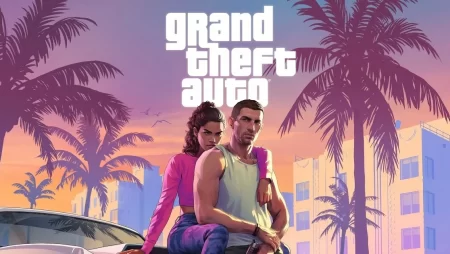
GTA 6. Everything we know so far [Release, editions, and pre-orders]
To say that people were excited about the GTA 6 news would be an understatement. One of the most popular RPG games ever made has finally received its first trailer.

How to Save Money on PC Games by Choosing the Right Edition: Standard, Deluxe or Ultimate
How to save money on PC games: compare Standard, Deluxe and Ultimate editions, season passes, early access and later upgrades before you buy.

GTA Games in Order: The Complete History of Grand Theft Auto
Find out how Grand Theft Auto grew from a 1997 top-down crime game into one of the best-selling franchises ever made. This guide lists all GTA games in order of release and recaps each one: the story, the gameplay, and its impact on the industry.