Trial versions of video games were an integral part of the video gaming world in the ’90s and ’00s, but later they were almost extinct. Now, thanks to events such as Steam Next Fest, video game demos have regained some popularity. This is a good moment to talk about them. Do players need demo games, and are they profitable for the industry?
A brief history of demo games
Every player growing up in the ’90s remembers video demo games distributed on covermounts attached to magazines. In the times when broadband internet appeared like a sci-fi scenario, this was the way publishers and developers distributed patches for their games and demo versions of upcoming releases.
Demos allowed players to glimpse the games and decide whether to buy the full versions. The Internet revolution made covermounts irrelevant. Today, patches are applied to players via launchers such as Steam or Epic Games. It’s so easy that some developers even abuse it and release games riddled with bugs. While game fixing flourished, demos disappeared almost entirely.
Demos cost money and time
Even though demos often let players see a small part of games, making them isn’t costless. Of course, most elements are ready, but you still have to prepare a working build that requires a quality assurance process. You want your demo to be polished and bug-free to show players the best of your game. It may be particularly challenging for smaller studios that can’t afford to delegate part of their team to work on a demo without hurting the development of the full version.
Making a good demo is also an art. Especially when you try to prepare a trial version of a complex game such as modern action-adventure games and RPGs. Using the first level is hardly an option as they usually serve as tutorials, gradually showing basic mechanics. Reavling some late fragments of the game would be much more representative, but it can spoil some revelations. Moreover, without a proper tutorial, players may have problems using all available skills. The solution is to develop a special level that requires only some easy-to-learn and fun-to-play mechanics. Back in the day, some game demos (e.g., Fallout Tactics) featured levels that didn’t appear in the final version. Unfortunately, it’s the most expansive and time-consuming option. Despite that, some developers still do it, for instance, by releasing a free playable prologue covering the events preceding the game’s main story.
Early access
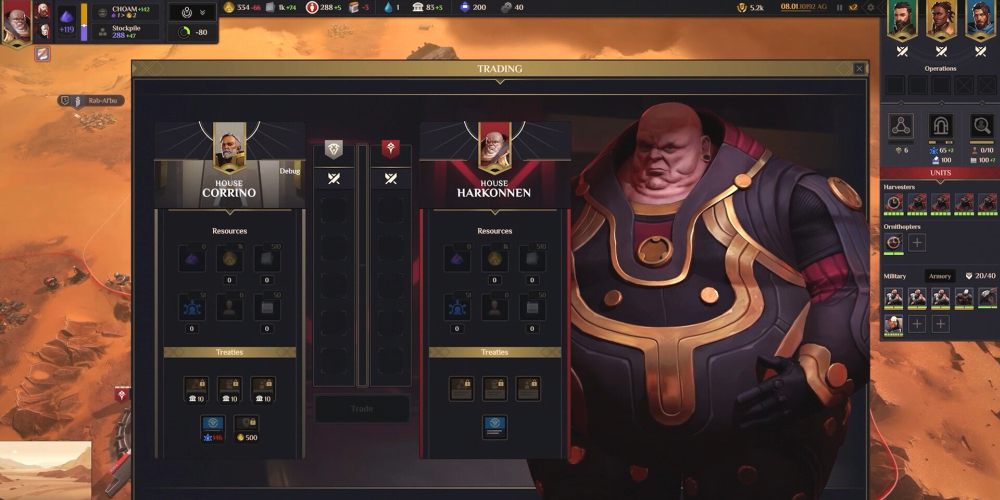
It may be one of the reasons why demo games found themselves on the list of threatened species in the Internet era. Mostly because, unlike demos, EA releases don’t require a flawless build. Of course, some players don’t get the idea and complain that an unfinished game has bugs and lacks content. Regardless, it’s a reasonable tool if a developer wants to get fast feedback, stay in touch with the community, and earn money on the game before its official release. From the gamers’ point of view, early access versions give them a chance to have an impact on the final version. Unfortunately, EA games are rarely free, yet they let gamers save some money because the price usually goes up once the 1.0 version is released. For instance, Dune: Spice Wars cost €19.24 during its EA stage; the price rose to €34.99 upon the official premiere.
Demos hurt hype and sales
Modern marketing campaigns involve building the hype for the game by feeding fans with trailers and news aimed at building up expectations and encouraging them to preorder it. A demo would give all the answers before the premiere and stop or slow down the hype train. Moreover, a demo would help hesitant players decide whether to buy the game, preventing some from preordering it blindly. According to Schell Games’ founder Jesse Schell, games for Xbox 360 that didn’t have a demo were twice as successful as those offering a trial version. This research may be outdated in 2024, yet many publishers believe that the buy-to-try approach is much more profitable than the try-before-buy strategy.
Demos protect your PR
As you can see, there are some reasons why demo games are so rare these days. However, events such as Steam Next Fest prove that this type of promotion doesn’t belong in the museum. There are some reasons why demos are valuable for both players and developers. For example, it decreases the number of angry customers. I believe that a player determining they won’t buy my game after playing its demo is a lesser evil than a player paying for a game, returning it, and then complaining about it all over the internet. And even if a refund wasn’t possible, I can rest assured that they will avoid my future game. Not because this one was straight-up bad but because they feel fooled.
Gameplay is essential
According to some, the number of teasers, trailers, and other promotional material is so great nowadays that players don’t need to play a game to know everything about it. I couldn’t disagree more! Watching trailers or even walkthroughs can’t replace playing the game. Something that looks easy and fun in the video may be frustrating when you try it yourself. And vice versa, mechanics that don’t seem appealing when you watch them can turn out to be entertaining. As you can see, it is a double-edged sword, and tricking players into buying games may be good for your sales charts but will almost certainly hurt the company’s reputation as memes and harsh opinions spread like viruses and are even harder to eradicate.
The choice is enormous
There were times when players could play almost all significant new titles. Now, the number of releases is so overwhelming that it’s impossible to try everything. It’s not only about time. Buying all new games would ruin anyone unless they are on the Forbes list. Some platforms have policies that allow players to return games if they’ve played less than 2 hours. Unluckily, in many titles, you barely go past the character creation and tutorial within 2 hours. Demo versions resolve this problem. You can give many games a shot without spending a dime. It’s risk-free, so it motivates players to test not only the upcoming AAA behemoths but also smaller titles that could otherwise easily slip under our radar.
Conclusion
As you can see, demo games have some disadvantages for developers and publishers. However, from the gamers’ perspective, there are no weak sides because trial versions let us try out more games and help us reasonably decide which releases we should buy. The only way of showing that we need demos is by playing them. Hence, stop reading this article and pick up your next demo to play!

Mobile Game Top-Ups on the Most Trusted Game Key Sites: One Guide to Four Games
The most trusted game key sites top up Free Fire, Genshin Impact, Zenless Zone Zero and MLBB with the right ID, a clear price and a set delivery time.